cloud technology

HRMS

How do I compare features of leading employee performance management tools?

Introduction How to Compare Features of Leading Employee Performance Management Tools The performance management landscape is buzzing with tools that promise clarity, alignment, and productivity. But choosing the right one? That’s the real challenge. To compare employee performance management tools effectively, you need a clear framework that cuts through the noise and spotlights what actually moves the needle for your team. 1. Goal-Setting & OKR Features Look for platforms that simplify alignment. Leading tools offer dynamic OKRs, role-based goal visibility, and progress tracking that updates automatically. If goal workflows feel clunky, the rest usually will too. 2. Review Cycles & Feedback Tools The best systems don’t just check boxes — they spark real conversations. Prioritize tools with 360° feedback, customizable review cycles, continuous check-ins, and templates that make managers’ lives easier, not harder. 3. Performance Analytics & Reporting Data is the heartbeat of modern people ops. Choose software that turns performance insights into dashboards you can act on. Heatmaps, trend lines, and sentiment markers should be standard, not premium extras. 4. Employee Engagement Integration Performance isn’t isolated. Platforms like Lattice, Leapsome, and Culture Amp integrate engagement surveys, pulse checks, and development tools into the same ecosystem — giving context to feedback and performance data. 5. Automation & Workflow Simplicity If a tool requires five clicks for every update, it’s not built for scaling teams. Look for systems that automate reminders, review cycles, progress updates, and goal tracking with minimal manual input. 6. Integrations & Tech Stack Compatibility Your performance tool should talk to your HRIS, payroll system, collaboration platforms, and SSO tools. Pre-built integrations cut onboarding time and reduce administrative headaches. For deeper benchmarking and evaluation frameworks, organizations like SHRM offer trusted HR research. Continue exploring tools with our Small Business Tools and HR Strategy Guides.

HRMS

What are the best HRMS products with mobile app support?

Introduction What Are the Best HRMS Products with Mobile App Support? Today’s teams move fast, work remotely, and expect HR tools that keep up with them. That’s why HRMS products with mobile app support have become essential — giving employees access to attendance, payroll, performance tools, and company updates straight from their phones. If your workforce is hybrid, remote, or simply on the go, mobile-first HR tech is non-negotiable. 1. BambooHR BambooHR’s mobile app is one of the cleanest in the space. Employees can manage time off, check their profiles, and get performance updates. Managers get quick access to approvals and insights. It’s people-friendly and ridiculously easy to use. 2. Rippling Rippling’s mobile experience is an extension of its all-in-one ecosystem. Employees can handle onboarding, payroll visibility, device permissions, and time tracking directly from the app. The UI feels modern, fast, and enterprise-level without the enterprise headache. 3. Gusto Gusto’s app focuses on the essentials: pay stubs, tax forms, time tracking, and simple HR tasks. It’s perfect for small businesses that need a lightweight but reliable mobile HR toolkit. 4. Zoho People Zoho People delivers a surprisingly deep mobile experience: attendance, geofencing, approvals, shift management, and leave requests — all in one place. It’s ideal for distributed teams or businesses with frontline employees. 5. Paycom Paycom’s mobile app is known for its employee-centered design. Workers can manage payroll, clock in and out, complete training modules, and even run certain HR self-service tasks without needing desktop access. Want broader HR tech benchmarks? Explore research and insights from SHRM for deeper evaluations. Continue exploring HR tools with our Small Business Tools and HR Strategy Guides.

HRMS

Can I get a free trial for a comprehensive workforce management system?

Introduction Can You Get a Free Trial for a Comprehensive Workforce Management System? The short answer? Yes — most leading HR tech providers now offer a free trial for a comprehensive workforce management system, because businesses want to test the real workflow before committing. With teams going hybrid, productivity tools becoming mission-critical, and budgets tighter than ever, “try before you buy” has become the norm rather than a luxury. 1. Workforce.com Workforce.com offers a free trial that lets you explore scheduling, attendance, compliance rules, and forecasting. It’s built for teams with complex shift patterns and frontline operations. 2. Rippling Rippling typically offers product demos and sandbox-style previews for workforce tools like time tracking, permissions, and onboarding. While not always a public “free trial,” the hands-on experience is strong. 3. BambooHR BambooHR provides a personalized free trial focused on time tracking, PTO management, and performance workflows. Great for small and mid-sized teams who want an intuitive, people-first experience. 4. Zoho People Zoho People offers one of the most generous trials, unlocking scheduling, attendance, automation, mobile check-ins, and HR workflows. It’s perfect for distributed teams or companies growing fast. 5. When I Work When I Work provides a straightforward trial for scheduling and time tracking — ideal for shift-based teams in retail, hospitality, healthcare, and service operations. For additional verification, HR associations like SHRM offer vendor directories and reviews to help you compare trial options. Want more HR tech insights? Explore: Small Business Tools • HR Strategy Guides

HRMS

Which companies provide customer support for cloud HR software in California?

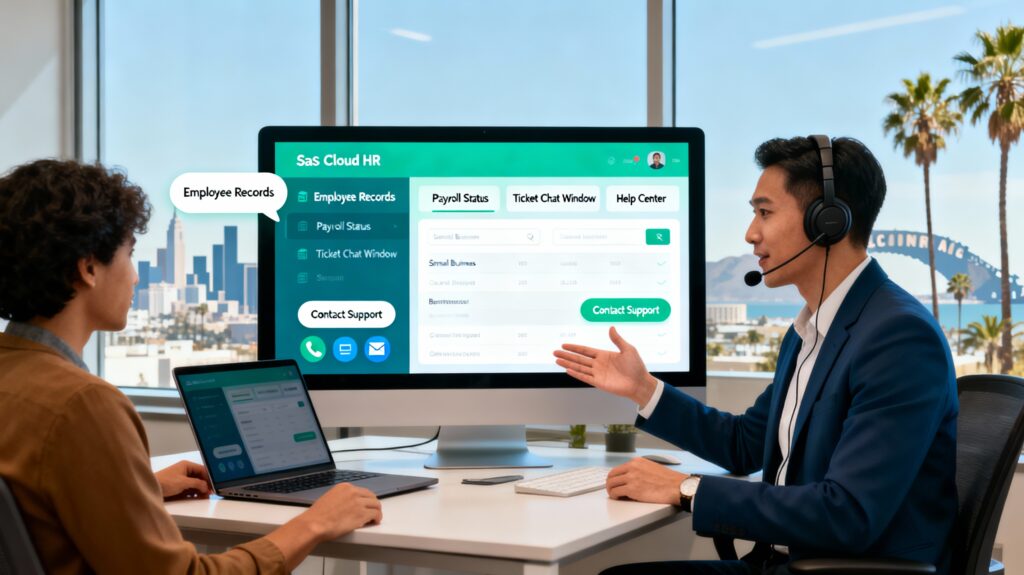
Introduction Which Companies Provide Customer Support for Cloud HR Software in California? California companies move fast — and they expect their HR tech partners to keep pace. That’s why customer support for cloud HR software in California has become a priority for businesses that need real-time help, localized guidance, and fast troubleshooting. Luckily, several HR tech vendors offer strong support for California-based teams. 1. BambooHR BambooHR provides responsive customer support accessible to California businesses via chat, phone, and email. Their team is known for quick resolutions and a human-centered experience — perfect for small and mid-sized companies. 2. Gusto Headquartered in California, Gusto offers strong local support for payroll, HR workflows, and compliance questions. Support includes live reps, onboarding specialists, and a deep knowledge base tailored to California employment laws. 3. Rippling Based in San Francisco, Rippling offers dedicated support channels for HR, payroll, and IT management. California-based companies benefit from localized expertise and quick access to product specialists. 4. Paychex Paychex provides California-specific HR support through regional representatives and compliance experts. They’re particularly helpful for businesses navigating California’s complex labor laws. 5. ADP ADP maintains dedicated support teams for California businesses, offering guidance on payroll, HR tools, workforce management, and state-specific compliance requirements. For deeper validation and HR support resources, organizations like SHRM offer trusted guidance for California companies. Want more insights? Explore our Small Business Tools and HR Strategy Guides.

HRMS

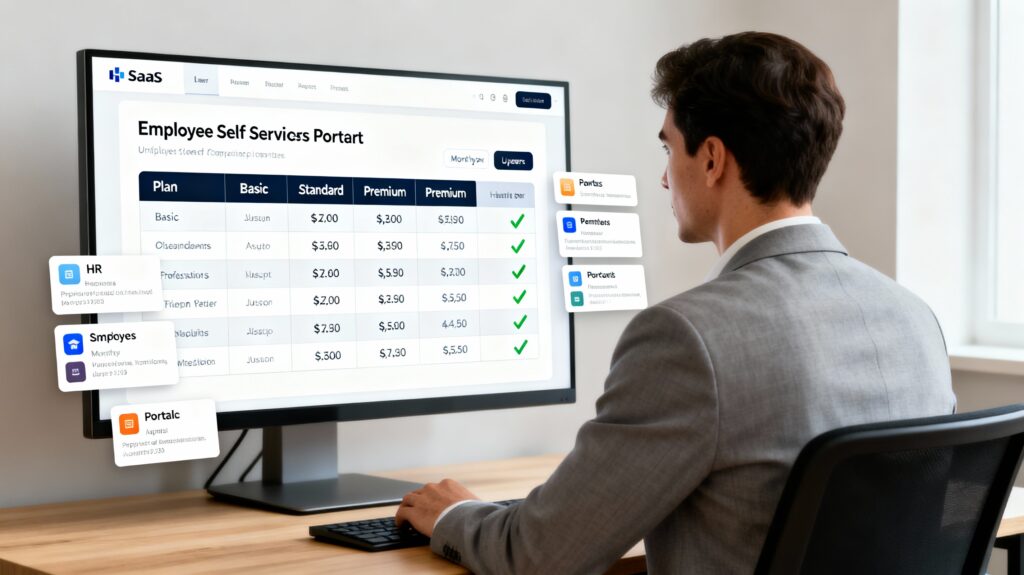
What are the pricing plans for popular employee self-service portals?

Introduction What Are the Best HRMS Products with Mobile App Support? Today’s teams move fast, work remotely, and expect HR tools that keep up with them. That’s why HRMS products with mobile app support have become essential — giving employees access to attendance, payroll, performance tools, and company updates straight from their phones. If your workforce is hybrid, remote, or simply on the go, mobile-first HR tech is non-negotiable. 1. BambooHR BambooHR’s mobile app is one of the cleanest in the space. Employees can manage time off, check their profiles, and get performance updates. Managers get quick access to approvals and insights. It’s people-friendly and ridiculously easy to use. 2. Rippling Rippling’s mobile experience is an extension of its all-in-one ecosystem. Employees can handle onboarding, payroll visibility, device permissions, and time tracking directly from the app. The UI feels modern, fast, and enterprise-level without the enterprise headache. 3. Gusto Gusto’s app focuses on the essentials: pay stubs, tax forms, time tracking, and simple HR tasks. It’s perfect for small businesses that need a lightweight but reliable mobile HR toolkit. 4. Zoho People Zoho People delivers a surprisingly deep mobile experience: attendance, geofencing, approvals, shift management, and leave requests — all in one place. It’s ideal for distributed teams or businesses with frontline employees. 5. Paycom Paycom’s mobile app is known for its employee-centered design. Workers can manage payroll, clock in and out, complete training modules, and even run certain HR self-service tasks without needing desktop access. Want broader HR tech benchmarks? Explore research and insights from SHRM for deeper evaluations. Continue exploring HR tools with our Small Business Tools and HR Strategy Guides.

HRMS

Top Applicant Tracking Systems for 2026: What Every U.S. Company Should Know

Introduction Introduction:Hiring in the U.S. has officially transformed into a battlefield. Talent is no longer something companies casually source whenever a role opens. Talent has become a high-stakes competition, and only the companies equipped with the right technology are winning. You can feel this shift everywhere. Startups are hiring faster than ever. Enterprises are expanding at speeds that overwhelm traditional HR processes. Employees are switching roles with new expectations. And the companies still relying on outdated hiring workflows are getting crushed under the weight of their own inefficiencies. This is the world where an applicant tracking system is no longer optional. It is the backbone of modern recruitment. It is the engine behind every fast-moving talent acquisition team. It is the system that decides whether a company hires the right people or gets left behind with slow, reactive hiring practices. Working with powerhouse companies like Intel and Google showed me something that changed the way I view hiring forever. The companies dominating the market don’t sort résumés manually. They don’t rely on email chains. They don’t lose candidates in the chaos of busy inboxes. They operate with precision. They operate with visibility. They operate with speed. And they owe that speed to the strength of their applicant tracking system. Datadotlabs knows exactly how critical this technology has become in 2026. They understand the urgency. They understand the pressure. They understand that hiring is not just a process anymore. Hiring is a brand experience. Hiring is a competitive advantage. Hiring is the heart of growth. This is why choosing the right applicant tracking system matters more today than it ever has in the history of recruitment. Why the Applicant Tracking System Has Become the Core of Modern Hiring Recruiters used to spend hours combing through résumés. They used to manually coordinate interviews. They used to track candidates in spreadsheets and email threads. Those days are gone. Completely gone. Because the speed of the labor market doesn’t allow manual workflows anymore. Companies want hiring that moves in real time. Candidates expect hiring processes that feel respectful and organized. HR teams demand systems that reduce stress, not add to it. And leadership expects data-driven insights that help them hire smarter. The applicant tracking system delivers all of this. It transforms hiring from a messy manual workflow into a structured, intelligent, automated process that moves faster than the labor market itself. And this speed isn’t just convenient. It is necessary for survival. In 2026, an applicant tracking system is not a tool. It is infrastructure. It is stability. It is clarity. It is the only way companies can meet the demands of a workforce that is more mobile, more selective, and more empowered than ever. How the Applicant Tracking System Streamlines Modern Recruitment Workflows When a company implements a powerful applicant tracking system, something incredible happens. Chaos becomes order. Confusion becomes clarity. Delays become momentum. Hiring becomes a smooth, predictable, measurable machine instead of a stressful juggling act. Every step of the recruitment journey becomes faster and smarter. Candidate sourcing becomes automated. Resume parsing becomes instant. Interview scheduling becomes efficient. Communication becomes seamless. Collaboration across HR and department teams becomes synchronized. Leadership gets full visibility into the pipeline. And candidates get a hiring experience that feels modern and professional instead of outdated and frustrating. The applicant tracking system sits at the center of all this movement. It doesn’t just organize hiring. It elevates it. It reshapes it. It turns reactive recruiting into proactive recruiting. Companies that adopt a powerful applicant tracking system stop chasing candidates. They start attracting them. Why Candidate Experience Is Now a Make-or-Break Factor in U.S. Recruiting The modern candidate does not think the way candidates thought 20 years ago. They are not patient. They are not obligated. They are not willing to sit through slow or confusing hiring processes. They expect clarity. They expect communication. They expect updates. And they expect all of it to feel fast and human. A slow hiring process is now one of the biggest reasons candidates reject job offers. And companies lose top talent simply because their workflows weren’t built for modern expectations. This is where an applicant tracking system becomes the hero of the entire hiring experience. It automates follow-ups. It keeps candidates informed. It eliminates wait times. It ensures every applicant feels acknowledged. It helps companies build trust before the candidate even walks through the door. Candidate experience is brand experience. And the applicant tracking system is the engine behind that experience. How Data Intelligence Has Become the Most Valuable Feature of the Applicant Tracking System Recruitment used to be guided by instinct. Now it’s guided by data. And the applicant tracking system is the data powerhouse behind every successful recruitment strategy. Companies can finally see which hiring channels work. They can understand how long each role takes to fill. They can identify which stages candidates drop off. They can measure recruiter effectiveness. They can analyze talent trends. They can predict hiring needs. They can optimize hiring funnels with the same precision marketing teams optimize conversion funnels. This is what modern companies expect from their applicant tracking system. Not just organization. Not just automation. Intelligence. Insight. Visibility. Predictability. Datadotlabs leans into this strength by designing systems that don’t just capture data but translate it into decisions. The applicant tracking system they envision is built for a future where hiring needs to evolve every month, not every decade. Why Large Enterprises Are Investing Heavily in Applicant Tracking Systems in 2026 Big companies have the hardest hiring challenges. They hire at scale. They hire constantly. They hire across multiple teams, multiple time zones, multiple regions, and multiple departments. Their pipelines are massive. Their turnover is high. Their expectations are intense. Without a strong applicant tracking system, large organizations collapse under the weight of their own hiring volume. This is why enterprises across the U.S. are implementing advanced applicant tracking system platforms in 2026. They need centralized hiring. They need fewer bottlenecks. They need faster

HRMS

Where can I find demos for advanced HR management software?

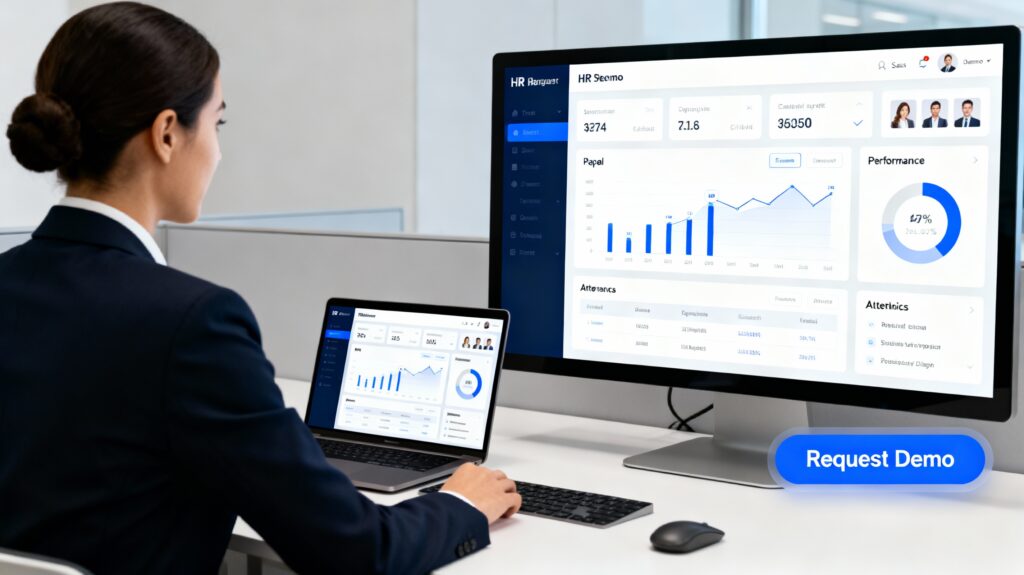
Introduction Where to Find Demos for Advanced HR Management Software When you’re on the hunt for advanced HR tech, you want more than glossy screenshots — you want the real thing. Advanced HR management software demos help you test workflows, peek under the UI hood, and see whether the system vibes with your team’s day-to-day rhythm. Here’s where the best demos live online. 1. Official Vendor Websites Most leading platforms like BambooHR, Rippling, ADP, HiBob, and Gusto offer self-guided product tours or bookable live demos. This is your most reliable starting point — the origin story straight from the source, with all the newest features showcased front and center. 2. Software Review Marketplaces Sites like G2 and Capterra often embed demo videos, screenshots, and walk-throughs from vendors. These spaces are comparison heaven: you can line up multiple systems, watch demos back-to-back, and get instant clarity on which one actually fits your workflow. 3. YouTube Product Walkthroughs YouTube is an unexpected goldmine — not just for vendor uploads, but for third-party reviewers and HR consultants who offer raw, unfiltered breakdowns of the platforms. No marketing fluff, just the truth. 4. Industry Associations Organizations like SHRM frequently host webinars or spotlight demos from rising HR tech providers. If you want curated insights grounded in industry standards, this route is clutch. 5. HR Tech Events & Virtual Expos Conferences like HR Tech Expo, Web Summit, or even vendor-hosted virtual showcases offer live demos with real product specialists. It’s the “ask anything, test everything” experience — minus the airfare. For more software exploration, check out our Small Business Tools and HR Strategy Guides.

HRMS

Top Features of Recruitment & Onboarding Software Every U.S. Company Should Know

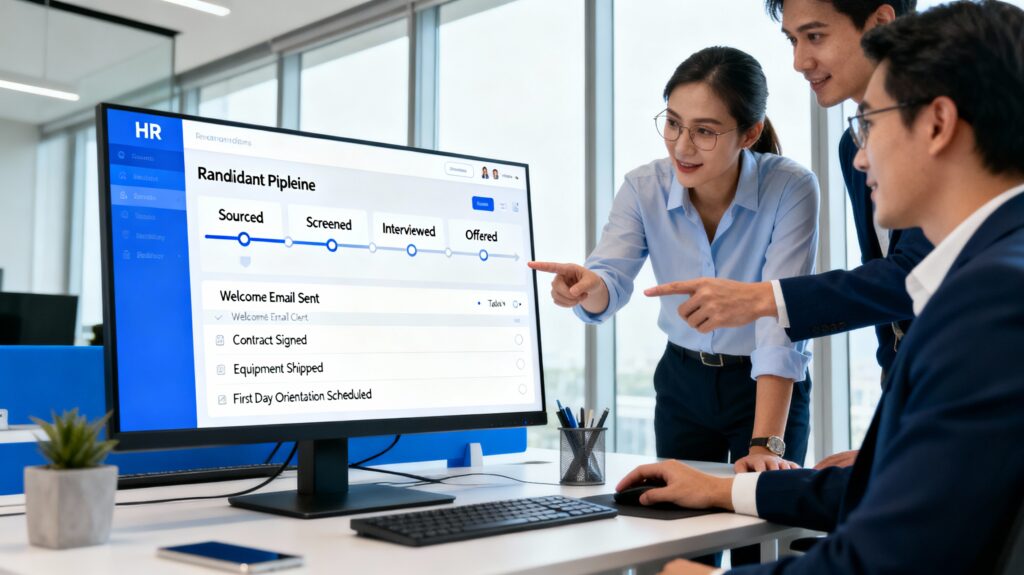
Introduction Introduction: The world of hiring has officially crossed a point of no return. Gone are the days when companies could rely on intuition, handwritten notes, scattered interview files, or long email chains to manage recruitment. Today’s talent landscape moves too fast. Candidates expect seamless digital interactions. HR teams are overwhelmed by volume and complexity. And organisations that still rely on outdated hiring workflows are watching great talent slip through their fingers. This is why Recruitment & onboarding HR software has become the backbone of modern hiring operations in the U.S. It is no longer a bonus. It is the system that determines whether companies hire with confidence or struggle with inefficiency. Whether candidates feel valued or ignored. Whether teams grow strategically or drown in manual tasks. Working with companies like Intel and Google showed me something crystal clear. The companies dominating the talent market aren’t just hiring faster. They’re hiring smarter. They’re hiring with clarity. They’re hiring with digital workflows that turn chaos into order. And all of that power comes from the right Recruitment & onboarding HR software. Datadotlabs understands this shift better than most. They’re helping organisations build hiring experiences that feel modern, human, intelligent, and deeply aligned with business goals. And as we move into the next decade of digital hiring, the companies that master recruitment technology will be the ones leading the future of work. Why Recruitment & Onboarding HR Software Matters More Than Ever Hiring has become a business survival strategy. Not a task. Not a department function. A true strategic advantage. Companies that hire well win faster. Companies that hire poorly fall behind. But the challenge is no longer just finding talent. It’s managing the entire lifecycle. It’s aligning departments. It’s organising communication. It’s building candidate relationships. It’s shaping the first impression new hires experience. This is exactly why Recruitment & onboarding HR software has exploded in demand. Large enterprises, fast-growing startups, and even small businesses now realise that manual hiring workflows simply cannot keep up with modern expectations. Candidates want clarity. HR teams want efficiency. Leaders want visibility. And onboarding must feel structured from day one so employees trust the company they just joined. Hiring used to be paperwork. Today it is entirely digital. Software is the engine behind that transformation. How Recruitment & Onboarding HR Software Reinvents the Hiring Experience Recruitment and onboarding used to feel disjointed. A candidate would finish the hiring process, only to repeat the same information once they accepted the offer. Documents were everywhere. Teams struggled with alignment. Communication broke down. New hires experienced confusion instead of clarity. Modern Recruitment & onboarding HR software changes everything. It transforms the hiring process into one continuous, connected journey where candidates feel guided instead of abandoned. As soon as someone moves from candidate to employee, the software automates the transition. Forms are generated instantly. Training modules are assigned automatically. Access permissions are granted without delay. The onboarding experience feels seamless rather than stressful. And that seamless experience makes a massive difference. When new hires feel supported on day one, they perform better. They feel more confident. They connect faster with their teams. They stay longer with the company. This is why onboarding isn’t an admin task anymore. It’s a strategic lever companies cannot afford to underestimate. Why Large Enterprises Depend on Recruitment & Onboarding HR Software The bigger the company, the more chaotic hiring becomes without the right technology. Large organisations face complexity at every level. Multiple departments. Multiple roles. Multiple locations. Multiple approval layers. And candidates who expect fast movement across all of it. Recruitment at scale demands structure. It demands precision. It demands consistency. And these qualities are exactly what Recruitment & onboarding HR software delivers. It gives enterprises the ability to manage thousands of applicants, coordinate interview rounds, customise hiring pipelines, track candidate touchpoints, maintain compliance, and standardise onboarding across every department. HR teams finally gain visibility into what’s working and what’s broken. Leaders finally see hiring as a measurable process rather than a guessing game. Without this kind of software, large companies collapse under their own weight. With it, they can operate as one synchronised recruiting engine. How Recruitment & Onboarding HR Software Elevates the Candidate Experience Candidates have options now. They’re evaluating companies just as much as companies are evaluating them. And when a candidate encounters slow communication or unclear instructions, they move on. They’re not waiting. Companies that don’t provide a smooth hiring experience lose talent faster than ever. Modern Recruitment & onboarding HR software gives companies the power to communicate clearly and consistently. Applicants receive updates automatically. They see interview schedules without confusion. They know where they stand. They feel respected. They feel valued. And they’re more likely to accept offers from companies that operate with professionalism and transparency. Candidate experience has become a competitive advantage. Companies that invest in better experiences win talent before the interview even happens. How Intelligent Automation Is Transforming HR Teams HR teams used to spend hours on repetitive tasks. Reviewing résumés. Sending follow-up emails. Scheduling interviews. Collecting onboarding documents. Updating internal systems. None of these tasks actually develops talent. They drain energy, destroy focus, and delay important decisions. This is where automation becomes the hero. Modern Recruitment & onboarding HR software automates administrative tasks so HR teams can focus on people instead of paperwork. Workflows that once took hours now take seconds. Recruiters get more time for strategy. Candidates receive faster responses. Leaders get clearer reports. And onboarding becomes a structured process rather than a chaotic scramble. Automation doesn’t replace HR. It empowers HR. It lets HR be more human by removing the workload that prevents connection. Why Data Is the New Fuel Behind Modern Talent Acquisition Data reveals the truth. It shows where candidates drop out. It shows which recruiters perform well. It shows which sourcing channels produce the best talent. It shows how long it takes to fill roles. It shows how successful onboarding programs actually are. Companies today don’t want guesswork. They want

HRMS

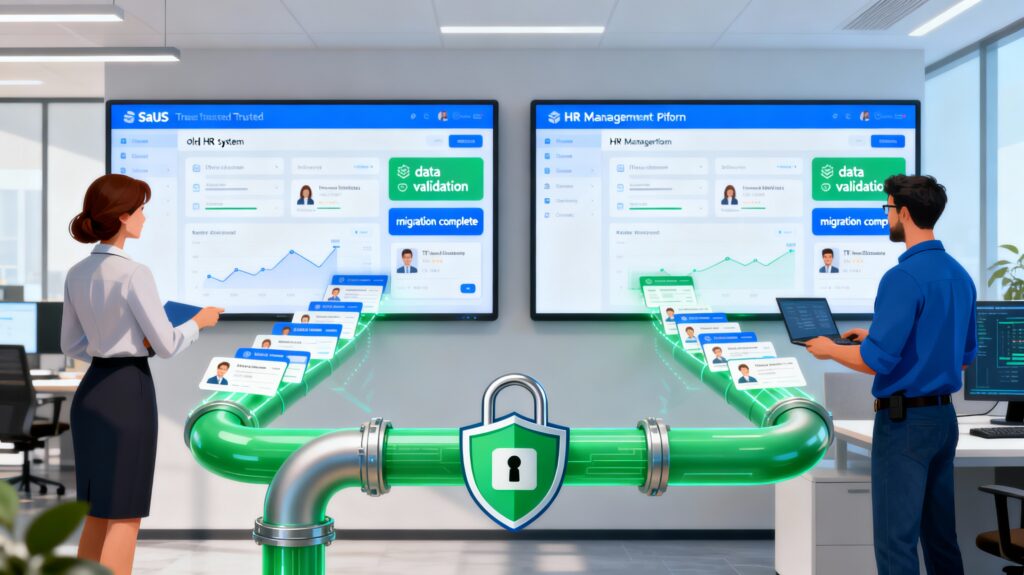
How to Migrate Employee Data to a New HR Management Platform Securely

Introduction How to Migrate Employee Data to a New HR Management Platform Securely Migrating HR data is a little like performing open-heart surgery on your organization — delicate, high stakes, and absolutely mission-critical. To migrate employee data to a new HR management platform securely, you need a blend of planning, protection, validation, and zero shortcuts. Here’s a clean, safe workflow that keeps your data — and your sanity — intact. 1. Start With a Full Data Backup Before you touch anything, back everything up. Export payroll records, personnel files, performance history, time-off balances, and documents. Store backups in encrypted locations with restricted access only. 2. Clean and Normalize the Data Migrating messy data only creates messy outcomes. Standardize formats, remove duplicates, update expired fields, and confirm accuracy. Many HR systems reject bad formatting — save yourself from failed imports later. 3. Encrypt Files Before Transport Whether you’re exporting spreadsheets or API-based data sets, ensure encryption in transit. Secure file-transfer protocols (SFTP), password-protected exports, and vendor-approved secure upload portals are must-haves. 4. Use Role-Based Permissions Limit who can touch sensitive data during the migration. Only authorized HR admins or IT specialists should handle uploads, mapping, and validation. The tighter the access, the smaller the risk footprint. 5. Validate Data After Import Run checks to confirm everything landed correctly — pay rates, titles, departments, time-off balances, and employment statuses. Spot mistakes early before teams start working in the new platform. 6. Retire Old System Access Securely Once the migration is complete, revoke access to the old system. Archive what’s required for compliance and delete redundant data securely to avoid duplicate storage risks. For deeper HR data governance insights, organizations like SHRM provide trusted security and compliance resources. Looking for more HR tech workflows? Explore our Small Business Tools and HR Strategy Guides.

HRMS

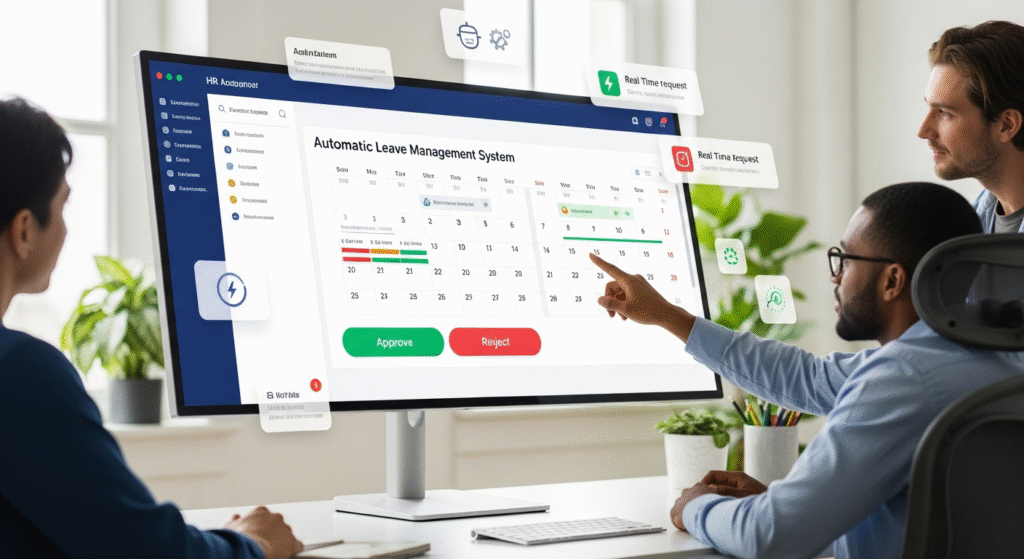
Streamline Employee Absences with an Automated Leave Management System

Introduction Streamline Employee Absences with an Automated Leave Management System If you’ve ever worked inside an HR team or even just tried to apply for a day off in a traditional workplace, you already know how messy leave tracking can get. Someone forgets to update a spreadsheet. Someone else adds a half-day leave on the wrong date. Another employee sends a leave request through chat instead of email. A manager loses track of who’s already approved for time off. Before long, no one knows who’s available, who’s out, and what the real attendance numbers look like for the week. It’s one of those problems that stays invisible until it becomes impossible to ignore. And for companies today, especially hybrid and distributed teams, leave chaos is more than an HR inconvenience. It disrupts projects. It creates confusion. It leads to employee frustration. And worst of all, it eats into productivity in ways that most organisations underestimate. That’s exactly why more businesses are shifting to an automated leave management system. They’re not doing it because it’s trendy. They’re doing it because the old way simply cannot keep up with the pace, complexity, and flexibility of modern work. If your employee absences still rely on manual approvals, email follow-ups, or spreadsheets that break at the worst possible time, you’re carrying a problem that has an easy, scalable solution. A leave management system isn’t just a tool it’s a structure. A workflow. A set of rules that run reliably in the background so people can focus on real work instead of chasing approvals or fixing old errors. In a workplace culture where clarity and communication matter more than ever, automation becomes a core part of employee experience. And the companies embracing it are already moving faster. The Hidden Chaos in Manual Leave Processes One of the things Gina Trapani often highlighted is that clutter creates friction. In the context of leave tracking, this friction spreads quickly. It starts silently like a forgotten update on a team calendar and eventually snowballs into project delays and misalignment. Miscommunication creeps in when employees use different channels to request leave or when managers forget to pass on updates. HR teams get stuck in an endless cycle of clarifying who was out, when they were out, and whether that leave was approved. And when multiple people take the same week off without proper coordination, deadlines begin to fall apart. Leave confusion isn’t a small administrative problem. It has real consequences for workflows and team dynamics. And most of the chaos comes from systems that depend on people remembering things perfectly. But people are not perfect, and manual tracking makes those imperfections more visible. Why an Automated Leave Management System Matters Modern workplaces operate across time zones, flexible schedules, and hybrid models. Employees expect stability, clarity, and fairness. Managers expect visibility. HR expects accuracy. None of these expectations can be met consistently with manual methods. An automated leave management system offers the structure needed to maintain clarity at scale. It centralises requests, approvals, balances, attendance records, and team calendars. It removes unnecessary communication loops and prevents avoidable errors. It gives employees autonomy without giving up control, and it gives HR teams room to breathe. When everything related to leave exists in one place, organisational communication becomes cleaner and more reliable. The shift may seem small, but the impact is enormous. Clarity That Reduces Stress for Everyone One of the biggest benefits of using a leave management system is clarity. Employees can instantly view their leave balance, upcoming time off, previous leave history, approval status, and team availability without asking anyone. This eliminates stress and prevents misunderstandings. Managers can see who is available, who is scheduled to be out, and how upcoming absences might affect ongoing projects. HR teams avoid answering repetitive questions because everything is visible in the system. Automation That Handles What People Shouldn’t A leave management system automates the repetitive, error-prone tasks that humans should not be responsible for manually. Leave balances get updated instantly. Attendance logs sync automatically. Managers receive notifications immediately. Policies are enforced accurately. Overlaps are flagged before they cause problems. Historical requests remain accessible. This allows HR teams to focus on more strategic work instead of fixing mistakes and managing follow-ups. Automation does not replace HR; it enhances it. Making Remote Work More Transparent In remote and hybrid environments, transparency becomes difficult. When people are not sitting next to each other, confusion around who is working and who is off becomes common. A leave management system solves this through one clear view of availability. Remote teams collaborate better when they understand each other’s schedules. Managers can plan more accurately. HR maintains clean attendance records without chasing information through multiple channels. Reducing Miscommunication and Workplace Conflict Miscommunication around leave is one of the most common causes of tension in teams. People make assumptions. Managers forget approvals. HR gets pulled into disputes long after they should have been avoided. An automated leave management system removes this friction by logging every request and approval with clear timestamps. Everyone sees the same information. There is no space for misunderstandings. Empowering HR with Reliable Leave Data HR teams thrive on accurate data. A leave management system becomes the trusted source of truth. It provides insights into absenteeism, workload distribution, burnout signals, policy compliance, and workforce trends. These insights help HR shift from reactive problem-solving to proactive planning. Policy Compliance Without Micromanagement Leave policies are essential for fairness, but enforcing them manually can feel restrictive. A leave management system applies policies automatically. Employees experience predictable, transparent rules instead of subjective decisions. HR no longer plays the role of enforcer. Preventing Overlaps and Maintaining Workflows Overlapping leave requests can disrupt entire projects. A leave management system identifies clashes early so managers can adjust schedules before issues escalate. Projects stay on track because planning becomes proactive instead of last-minute. Giving Employees More Control and Autonomy Employees value tools that allow them to manage their own tasks. A leave management system gives

Scroll to Top