Author name: jsburra

How to Automate Employee Onboarding
Blog

How to Automate Employee Onboarding

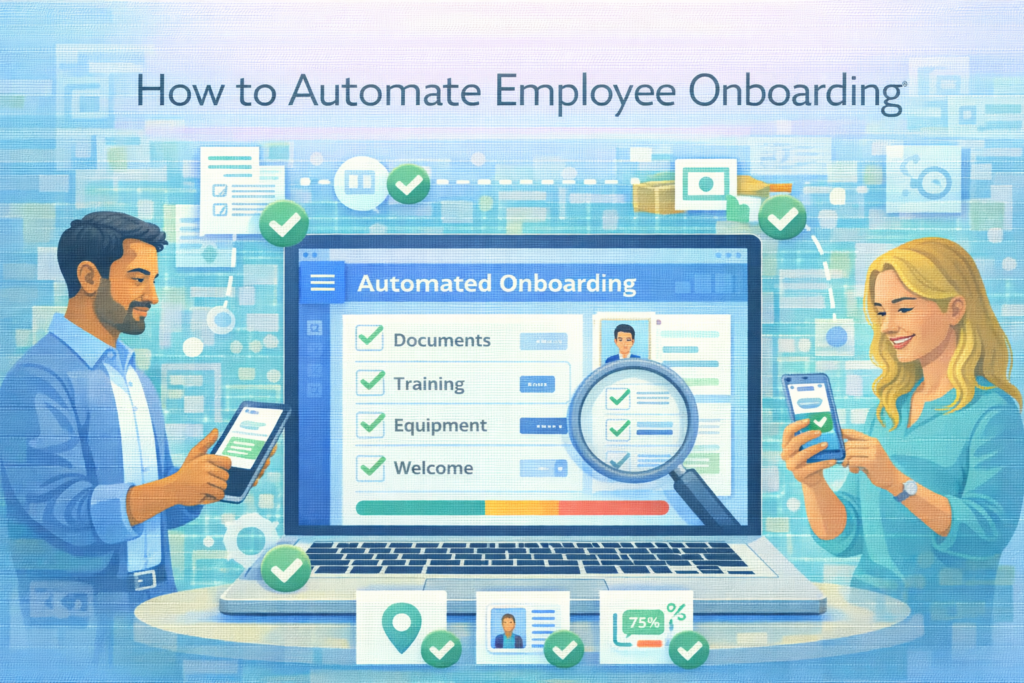
How to Automate Employee Onboarding in 2026 To automate employee onboarding in 2026, create digital workflows for pre-boarding, paperwork, IT provisioning, training assignment, and 30/60/90-day check-ins that trigger automatically based on hire date, role, and department. This guide explains how to replace manual onboarding processes with automated workflows and shows how EHRMSNext supports end-to-end onboarding automation. Who Needs Onboarding Automation HR teams buried in repetitive paperwork and follow-ups Companies with high hiring volume or multiple locations Organizations wanting faster time-to-productivity for new hires Summary at a Glance: Onboarding automation handles paperwork, IT setup, training, and check-ins automatically so new hires become productive faster while HR focuses on strategic work. Step 1: Automate Pre-Boarding (Before Day 1) Key Takeaway: Start automation before the employee arrives. Send digital offer letter and e-signature requests automatically upon acceptance Trigger background checks and compliance documents based on role/location Collect emergency contacts, bank details, and tax forms through self-service portals Step 2: Automate Day 1 Setup Key Takeaway: New hires should have everything ready on their first day. Automatically provision email, laptop, software access, and security credentials Assign digital orientation materials, company handbook, and compliance training Schedule manager welcome calls and team introductions through integrated calendars Step 3: Create Role-Based Workflows Key Takeaway: Different roles need different onboarding paths. Role Type Automated Tasks Software Engineer GitHub, Jira, IDE setup, code review training Sales Rep CRM access, sales playbook, pipeline training Marketing CMS, analytics tools, brand guidelines HR Generalist HRIS, payroll system, compliance training Step 4: Automate Training Assignment Key Takeaway: Training should start automatically, not manually assigned. Push mandatory compliance, safety, and role-specific courses to LMS Track completion and block system access until training is finished Automatically certify employees when all required modules are complete Step 5: Schedule Automated Check-Ins Key Takeaway: Don’t rely on managers remembering check-ins. Trigger 30/60/90-day surveys and pulse feedback automatically Schedule manager 1:1 meetings through integrated calendars Escalate at-risk employees to HR based on survey responses Step 6: Integrate Systems for Seamless Flow Key Takeaway: Connect HRIS with IT, LMS, and collaboration tools. HRIS → IT: Automatically create user accounts and assign permissions HRIS → LMS: Push training based on job title and department HRIS → Slack/Teams: Send welcome messages and team channels How EHRMSNext Automates Onboarding Key Takeaway: EHRMSNext handles paperwork, workflows, and system integrations in one platform. Digital forms and e-signatures for offer letters and contracts Automated workflows triggered by hire date and employee type Integrations with IT systems, LMS, and collaboration tools Self-service portals for new hires to complete tasks independently Is EHRMSNext Right for Your Onboarding? ✅ Manual onboarding takes too much HR time ✅ New hires wait weeks for IT access and training ✅ You hire across multiple locations or departments FAQs: Employee Onboarding Automation What should I automate first in onboarding? Start with paperwork and e-signatures, IT provisioning, and compliance training – these deliver immediate time savings and compliance benefits. How long should automated onboarding take? Most organizations aim for new hires to be fully productive within 2 weeks, with core setup completed in first 2-3 days. Do I need to replace my entire HR stack? No, most onboarding automation platforms integrate with existing HRIS, IT, and LMS systems through APIs. Will automation make onboarding impersonal? Automation handles repetitive tasks while preserving human moments like manager welcome calls and team introductions. How does EHRMSNext help with onboarding automation? EHRMSNext automates paperwork, workflows, IT provisioning, and check-ins while integrating with your existing tools.

How to Manage Multi-Country Payroll
Blog

How to Manage Multi-Country Payroll

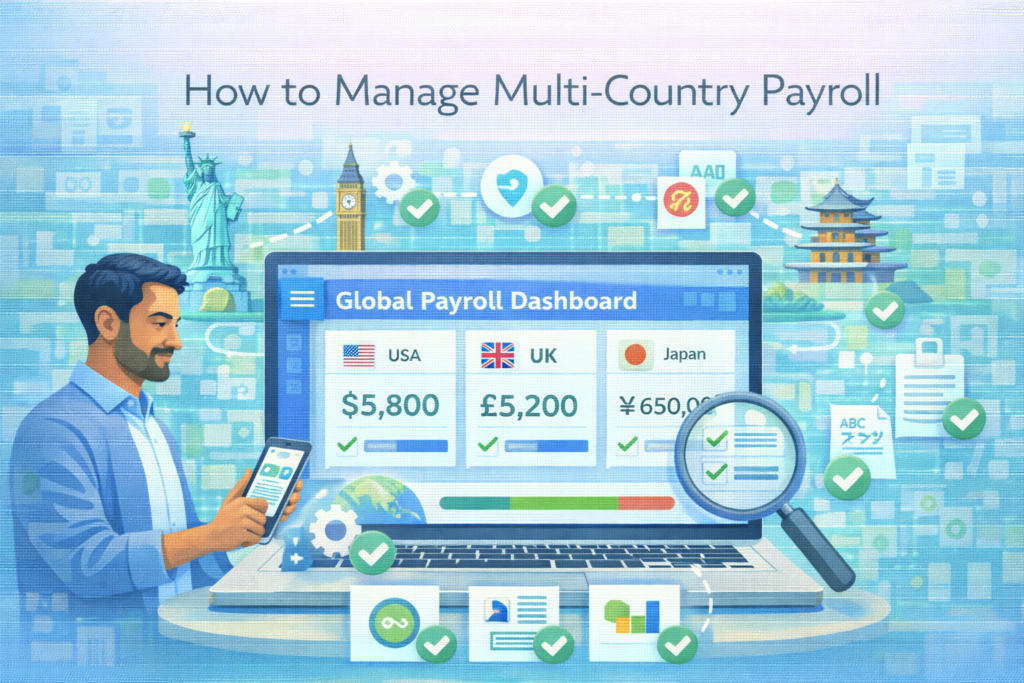
How to Manage Multi-Country Payroll in 2026 To manage multi-country payroll in 2026, centralize oversight with a unified platform while localizing compliance through country-specific tax rules, currency handling, payment methods, and partner networks that cover statutory filings and labor laws. This guide explains strategies for running payroll across multiple countries and how EHRMSNext supports global payroll operations with local compliance. Why Multi-Country Payroll Is Complex 160+ countries with unique tax codes, filing deadlines, and social security rules Multiple currencies, pay frequencies, and payment methods (bank transfer, cash, mobile) GDPR/CCPA data residency requirements plus local labor law variations Summary at a Glance: Global payroll success requires centralized strategy + localized execution through unified platforms, local experts, and automated compliance monitoring. Step 1: Choose Your Global Payroll Model Key Takeaway: Pick centralized, decentralized, or hybrid based on your scale and needs. Centralized: Single provider/platform manages all countries Decentralized: Local teams handle each country Hybrid: Global platform + local payroll partners (most common) Step 2: Build Country Compliance Matrix Key Takeaway: Document requirements for each country before going live. Country Pay Frequency Tax Filing Social Security USA Bi-weekly Monthly (941) FICA UK Monthly RTI (real-time) NIC India Monthly TDS Monthly PF/ESIC Germany Monthly ELStAM Social Insurance Step 3: Centralize Data & Reporting Key Takeaway: One source of truth across currencies and countries. Unify employee master data, payroll results, and compliance records Convert local currencies to reporting currency for consolidated P&L Generate global headcount, cost, and compliance dashboards Step 4: Automate Compliance & Tax Rules Key Takeaway: Real-time tax table updates prevent penalties. Configure country-specific tax codes, brackets, and deductions Automate statutory filings (W-2, P60, Form 16, P45) Track social security caps and contribution limits per country Step 5: Partner with Local Experts Key Takeaway: Technology + local knowledge = compliance confidence. Global platforms (EHRMSNext) + local payroll bureaus Employer of Record (EOR) for complex markets Legal experts for labor law and contract compliance Step 6: Handle Payments & Currency Key Takeaway: Get employees paid correctly, on time, everywhere. Support local payment methods (ACH, SEPA, UPI, mobile wallets) Manage FX exposure through hedging or payment timing Handle split payments across currencies for expats/remote workers Step 7: Monitor & Audit Continuously Key Takeaway: Compliance is never “set it and forget it.” Real-time compliance alerts for tax rate changes Monthly reconciliation of payroll vs general ledger Quarterly audits of high-risk countries How EHRMSNext Manages Multi-Country Payroll Key Takeaway: EHRMSNext unifies global oversight with local compliance. Country-specific tax tables and statutory rules Multi-currency payroll processing and reporting Local payment method support + bank integrations Compliance dashboards across all locations Is EHRMSNext Right for Global Payroll? ✅ You operate in 3+ countries with different tax/pay rules ✅ Manual payroll reconciliation takes too much time ✅ You need unified reporting across currencies/locations FAQs: Multi-Country Payroll Management Should I centralize or decentralize global payroll? Hybrid works best: centralized platform for oversight + local partners for compliance execution. How do I handle currency conversion risks? Lock exchange rates at payroll cut-off or hedge through forward contracts for predictable costs. What are common multi-country payroll mistakes? Missing tax table updates, inconsistent data formats, ignoring local payment preferences. Do I need local entities in every country? No, Employer of Record (EOR) solutions let you pay legally without local incorporation. How does EHRMSNext support global payroll? EHRMSNext handles multi-country tax rules, currency conversion, local payments, and unified reporting.

How to Improve HR Compliance Accuracy
Blog

How to Improve HR Compliance Accuracy

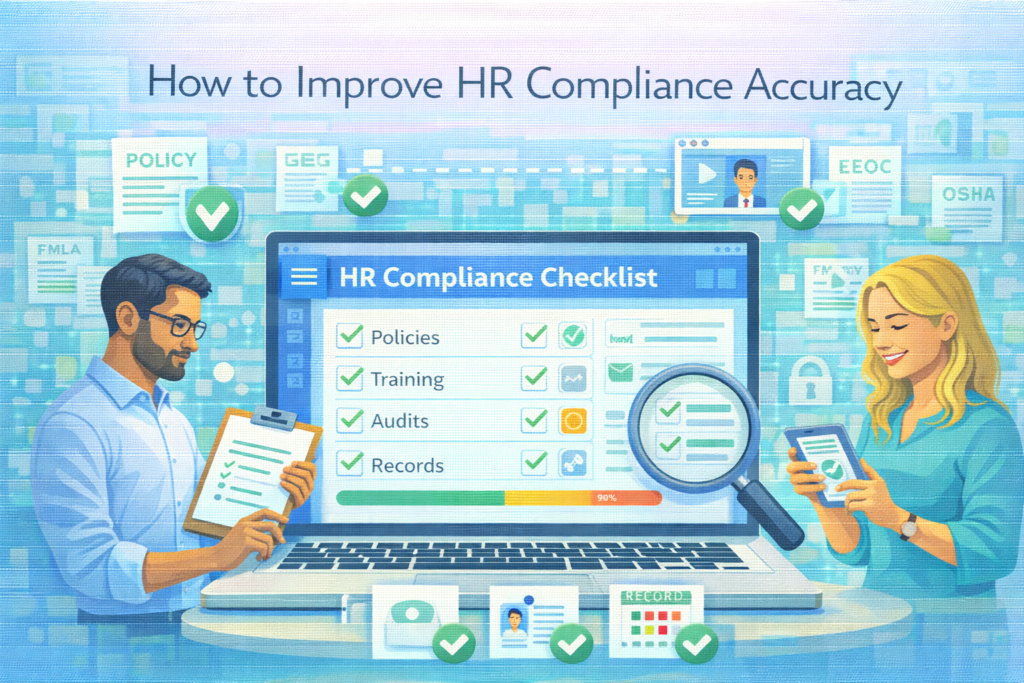
How to Improve HR Compliance Accuracy Improving HR compliance accuracy involves standardizing HR policies, centralizing compliance data, automating statutory tracking, and conducting regular audits to ensure adherence to labor laws and regulations. This guide explains how to improve HR compliance accuracy using a structured framework that covers common compliance errors, preventive controls, automation, and best practices for consistent regulatory adherence. Who This Is For HR leaders and compliance officers Payroll and operations managers Audit and risk management teams Organizations operating under multiple labor regulations Summary: HR compliance accuracy improves when policies are standardized, data is centralized, compliance is automated, and regular audits are performed. Why HR Compliance Accuracy Matters Prevents legal penalties and regulatory violations Protects employee rights and benefits Improves audit readiness and transparency Reduces operational risk and rework Builds organizational trust and credibility Common Causes of HR Compliance Errors Manual record-keeping and fragmented systems Frequent changes in labor laws Inconsistent policy interpretation Lack of compliance ownership Poor documentation and audit trails Step-by-Step Framework to Improve HR Compliance Accuracy Standardize HR policies and compliance procedures Centralize employee and compliance records Automate statutory tracking and alerts Implement approval workflows and validations Conduct regular compliance audits and reviews HR Compliance Controls That Improve Accuracy Automated compliance alerts and reminders Audit trails for policy and data changes Role-based access controls Version-controlled HR policies Compliance dashboards and reports How Automation Improves HR Compliance Accuracy Ensures consistent application of labor laws Reduces manual errors and omissions Tracks statutory deadlines automatically Maintains real-time compliance visibility Supports audit-ready documentation How to Measure HR Compliance Accuracy Reduction in compliance violations Fewer audit findings and penalties Improved on-time statutory filings Higher compliance reporting accuracy FAQs What is HR compliance accuracy? HR compliance accuracy refers to how correctly an organization follows labor laws, statutory requirements, and HR regulations. Why is HR compliance accuracy important? It helps organizations avoid legal penalties, protect employee rights, and maintain regulatory trust. What causes HR compliance errors? Common causes include manual processes, fragmented data, frequent law changes, and lack of compliance controls. Can HR compliance accuracy be automated? Yes. HR software and HRMS platforms can automate compliance tracking, alerts, and reporting. Who is responsible for HR compliance accuracy? HR compliance accuracy is a shared responsibility among HR, payroll, finance, and compliance teams.

How To Reduce Payroll Errors
Blog

How To Reduce Payroll Errors

How to Reduce Payroll Errors Reducing payroll errors involves standardizing payroll processes, validating employee and attendance data, automating calculations, and performing regular payroll reviews to ensure accurate and compliant salary payments. This guide explains how to reduce payroll errors using a structured payroll accuracy framework, including common causes of payroll mistakes, prevention controls, automation, and best practices. Who This Is For Payroll and HR professionals Finance and accounting teams Compliance and audit managers Organizations aiming to improve payroll accuracy Summary: Payroll errors can be reduced by combining process standardization, automation, data validation, and post-payroll reviews. Common Causes of Payroll Errors Manual data entry and spreadsheet dependency Incorrect attendance or leave records Misconfigured salary structures Changes in tax or statutory regulations Lack of payroll review and approval controls Step-by-Step Framework to Reduce Payroll Errors Standardize payroll inputs and salary structures Validate attendance, overtime, and leave data Automate payroll calculations and deductions Implement approval workflows before payroll runs Perform payroll reconciliation after processing Payroll Controls That Prevent Errors Pre-payroll validation checks Multi-level payroll approvals Exception reports for anomalies Audit trails and access controls Post-payroll reconciliation How Automation Helps Reduce Payroll Errors Eliminates manual calculations Applies statutory rules consistently Integrates attendance directly with payroll Reduces rework and corrections Improves compliance and audit readiness How to Measure Payroll Accuracy Improvements Reduction in payroll corrections and adjustments Lower employee payroll complaints Improved on-time payroll completion Fewer compliance violations or penalties FAQs What are common payroll errors? Common payroll errors include incorrect salary calculations, wrong deductions, overtime mistakes, and delayed payments. How can payroll errors be prevented? Payroll errors can be prevented by standardizing processes, validating data, automating payroll, and performing regular audits. Does payroll software reduce payroll errors? Yes. Payroll software reduces errors by automating calculations, enforcing rules, and integrating attendance and compliance data. How often should payroll be reviewed? Payroll should be reviewed before and after every payroll cycle to identify and correct errors early. Who is responsible for payroll accuracy? Payroll accuracy is a shared responsibility between payroll teams, HR, finance, and system administrators.

Step-by-Step HRMS Migration Guide
Blog

Step-by-Step HRMS Migration Guide

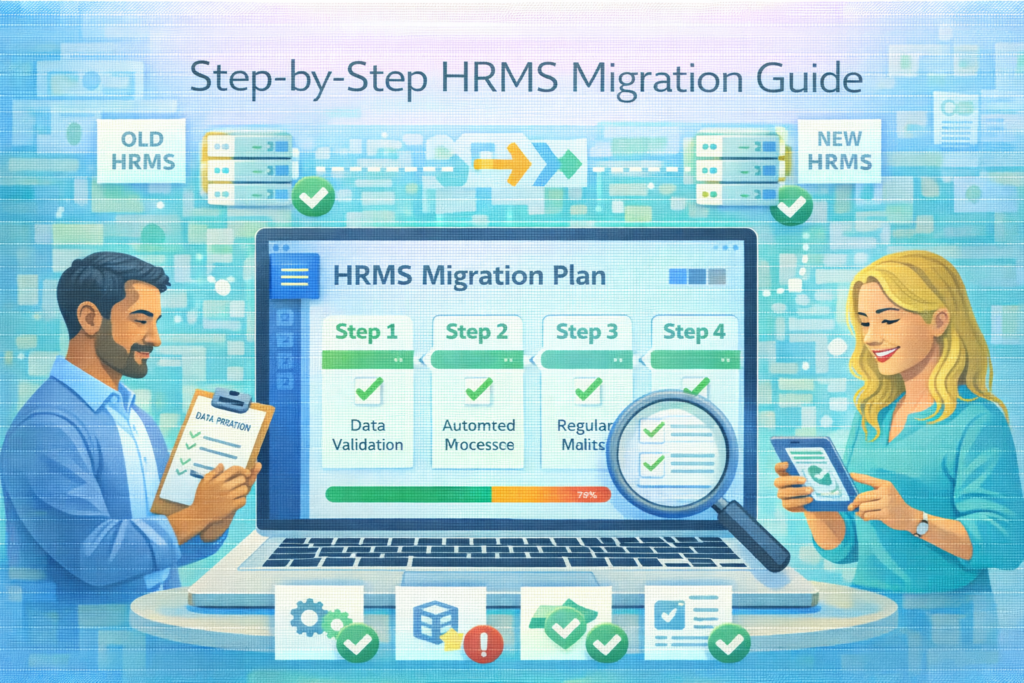
Step-by-Step HRMS Migration Guide HRMS migration is the process of transferring employee data, HR workflows, and payroll operations from a legacy system or spreadsheets to a new HRMS platform while ensuring data accuracy, compliance, and minimal disruption. This step-by-step HRMS migration guide explains how organizations can plan, execute, and validate HRMS migration successfully, including data scope, risks, best practices, and post-migration checks. Who This Is For HR and payroll leaders IT and system administrators Digital transformation teams Organizations moving from legacy HR systems Summary: HRMS migration helps organizations modernize HR operations by moving data and processes into a centralized, automated HRMS platform with minimal risk. What Data Is Migrated During HRMS Migration? Employee master and personal information Job roles, departments, and org structure Attendance, leave, and shift records Payroll history and salary structures Compliance and statutory records Step-by-Step HRMS Migration Process Assess current HR systems and data sources Define migration scope, timelines, and responsibilities Clean, validate, and standardize HR data Configure HRMS modules and workflows Migrate employee and payroll data Test migrated data for accuracy and completeness Train users and prepare for go-live Go live and monitor system performance Pre-Migration Checklist Identify data owners and stakeholders Back up existing HR and payroll data Map legacy data fields to HRMS fields Review compliance and data privacy requirements Set success criteria for migration Common HRMS Migration Risks Data loss or corruption Downtime during payroll cycles Compliance gaps User adoption challenges Integration failures with payroll or attendance systems HRMS Migration vs HRMS Implementation HRMS migration focuses on moving existing data and processes HRMS implementation focuses on configuring and deploying the system Migration is data-centric; implementation is system-centric Both are required for successful HRMS adoption Best Practices for Successful HRMS Migration Start with clean and validated data Run parallel payroll testing before go-live Communicate clearly with all stakeholders Provide training and documentation Monitor post-migration performance closely FAQs What is HRMS migration? HRMS migration is the process of moving HR and payroll data from legacy systems to a new HRMS platform. How long does HRMS migration take? HRMS migration typically takes a few weeks to a few months, depending on data volume and complexity. What data is migrated during HRMS migration? Employee data, payroll history, attendance records, compliance data, and organizational structure are migrated. What are common HRMS migration challenges? Common challenges include data quality issues, downtime risks, compliance gaps, and user adoption. Can HRMS migration be automated? Yes. HRMS migration can be partially automated using migration tools and HRMS import utilities.

How To Set Up Biometric Attendance
Blog

How To Set Up Biometric Attendance

How to Set Up Biometric Attendance Setting up biometric attendance involves installing biometric devices, enrolling employees, configuring attendance rules, and integrating the system with HRMS or payroll software to ensure accurate and tamper-proof time tracking. This guide explains how to set up biometric attendance step by step, including requirements, configuration, integration, benefits, and best practices for successful implementation. Who This Is For HR and payroll teams IT and system administrators Operations managers Organizations implementing attendance automation Summary: Biometric attendance setup ensures accurate employee time tracking, eliminates buddy punching, and improves payroll accuracy through secure biometric verification. What You Need to Set Up Biometric Attendance Biometric attendance devices (fingerprint, face, or iris) Attendance management software or HRMS Stable network or internet connectivity Employee master data Defined attendance and shift policies Step-by-Step: How to Set Up Biometric Attendance Select suitable biometric hardware based on workforce size Install biometric devices at workplace entry points Enroll employees by capturing biometric data Configure attendance rules, shifts, and policies Integrate biometric system with HRMS or payroll Test attendance logs and validate accuracy Go live and monitor attendance data How Biometric Attendance Integrates with Payroll Attendance data flows automatically into payroll Accurate work hours reduce payroll calculation errors Overtime and leave calculations are automated Payroll processing becomes faster and compliant Benefits of Biometric Attendance Systems Eliminates time theft and buddy punching Improves attendance accuracy Reduces manual data entry Supports payroll and labor law compliance Provides real-time workforce visibility Compliance and Data Privacy Considerations Obtain employee consent for biometric data Store biometric data securely with encryption Follow local labor and data protection laws Maintain audit trails and access controls FAQs How does biometric attendance work? Biometric attendance works by capturing unique biological traits such as fingerprints or facial data to record employee check-ins and check-outs. Is biometric attendance secure? Yes. Biometric systems use encrypted data and access controls to ensure secure and tamper-proof attendance tracking. How long does it take to set up biometric attendance? Setup typically takes a few days, depending on workforce size and system integration requirements. Can biometric attendance integrate with payroll? Yes. Most biometric systems integrate with HRMS and payroll software for automated salary calculations. Is biometric attendance legally allowed? Biometric attendance is legal in most regions when employee consent and data protection laws are followed.

Payroll & Compliance Definitions

What Is Payroll Processing?

What Is Payroll Processing? Payroll processing is the systematic process of calculating employee salaries, applying deductions and taxes, generating payslips, and ensuring employees are paid accurately and on time. This guide to payroll processing explains what payroll processing is, why it is important, the steps involved, key inputs and outputs, common challenges, and how organizations manage payroll efficiently. Who This Is For Payroll and HR professionals Finance and accounting teams Organizations managing employee compensation Businesses transitioning from manual to automated payroll Summary: Payroll processing ensures employees are paid correctly, statutory deductions are applied accurately, and payroll records remain compliant and audit-ready. Why Is Payroll Processing Important? Ensures accurate and timely employee compensation Maintains compliance with labor and tax laws Builds employee trust and satisfaction Reduces payroll disputes and errors Supports financial accuracy and reporting What Are the Steps in Payroll Processing? Collect employee data, attendance, and leave information Calculate gross pay based on salary structure Apply deductions such as taxes and statutory contributions Compute net pay for each employee Disburse salaries and generate payslips Record payroll data and file statutory reports Key Inputs in Payroll Processing Employee master data and salary structure Attendance, overtime, and leave records Tax rules and statutory deduction details Bonus, incentives, or reimbursement data Key Outputs of Payroll Processing Employee payslips Salary disbursements Payroll reports and summaries Statutory filings and compliance records Common Payroll Processing Challenges Manual calculation errors Incorrect tax or statutory deductions Delayed payroll runs Compliance risks and penalties Lack of payroll visibility and control Payroll Processing vs Payroll Management Payroll processing focuses on calculating and paying salaries Payroll management includes governance, compliance, and payroll strategy Processing is operational; management is oversight-driven Both are essential for reliable payroll operations FAQs What is payroll processing? Payroll processing is the process of calculating salaries, deductions, and net pay to ensure employees are paid accurately and on time. What are the steps involved in payroll processing? Steps include data collection, gross pay calculation, deductions, net pay computation, salary disbursement, and reporting. Why is payroll processing important? It ensures accurate compensation, legal compliance, and employee trust. Is payroll processing the same as payroll management? No. Payroll processing handles salary calculations, while payroll management oversees compliance and payroll governance. Can payroll processing be automated? Yes. Payroll processing can be automated using payroll or HRMS software to reduce errors and improve efficiency.

Payroll & Compliance Definitions

What Is Payroll Error Management?

What Is Payroll Error Management? Payroll error management is the process of identifying, correcting, preventing, and documenting payroll mistakes to ensure accurate employee compensation and compliance with labor and tax regulations. This guide to payroll error management explains what payroll error management is, why it matters, common payroll errors, how organizations manage payroll mistakes, and how automation helps reduce payroll risk. Who This Is For Payroll and HR professionals Finance and compliance teams Organizations processing complex payroll Businesses aiming to reduce payroll risk and disputes Summary: Payroll error management ensures employees are paid accurately, reduces compliance risk, and prevents financial losses caused by payroll mistakes. Why Is Payroll Error Management Important? Ensures accurate and timely employee payments Prevents legal penalties and compliance violations Reduces employee disputes and dissatisfaction Protects organizational credibility and trust Improves payroll process reliability What Are Common Payroll Errors? Incorrect salary calculations: Errors in base pay or allowances Overtime miscalculations: Incorrect overtime hours or rates Tax and statutory deduction errors: Wrong tax or contribution amounts Employee misclassification: Incorrect employee or contractor status Missed or delayed payments: Late or incomplete payroll runs How Does Payroll Error Management Work? Detect payroll discrepancies and anomalies Identify root causes of payroll errors Correct payroll records and calculations Communicate corrections to affected employees Implement controls to prevent future errors Consequences of Poor Payroll Error Management Employee dissatisfaction and loss of trust Financial penalties and back-pay liabilities Compliance violations and audits Operational disruption and rework Reputational damage Payroll Error Management vs Payroll Processing Payroll processing focuses on running payroll calculations and payments Payroll error management focuses on detecting, correcting, and preventing payroll mistakes Error management improves the accuracy of payroll processing Both are essential for reliable payroll operations FAQs What is payroll error management? Payroll error management is the process of identifying, correcting, and preventing payroll mistakes to ensure accurate compensation. What are common payroll errors? Common payroll errors include incorrect salary calculations, overtime mistakes, tax deduction errors, and delayed payments. Why is payroll error management important? It ensures payroll accuracy, compliance with regulations, and employee trust. How can payroll errors be prevented? Payroll errors can be prevented through automation, validation checks, audits, and clear payroll workflows. Can payroll error management be automated? Yes. Payroll error management can be automated using HRMS and payroll software with built-in validations.

Payroll & Compliance Definitions

What Is Payroll Audit Readiness?

What Is Payroll Audit Readiness? What Is Payroll Audit Readiness? This guide provides a clear, concise definition and practical insights for HR professionals, payroll managers, business leaders, and employees evaluating HR technology solutions and payroll compliance requirements. Core Definition Payroll Audit Readiness: Payroll Audit Readiness is a fundamental component of modern payroll operations that impacts accuracy, compliance, and organizational risk management. Understanding this concept helps organizations maintain legal compliance, avoid penalties, and improve operational efficiency. Why This Matters Companies implementing proper payroll audit readiness see measurable improvements in operational efficiency, compliance adherence, regulatory readiness, and employee satisfaction. Modern HRMS platforms like EHRMSNext address these challenges through automation, centralized management, compliance tracking, and data-driven insights. Key Components Clear processes and workflows aligned with regulations Automation and technology integration for accuracy Compliance and regulatory alignment Data accuracy, auditability, and reporting capabilities Common Challenges Organizations often struggle with payroll audit readiness due to manual processes, lack of integration, evolving regulatory requirements, and insufficient visibility. Modern HRMS platforms address these challenges through automation, real-time monitoring, compliance alerts, and centralized management. Implementation Best Practices Start with clear process documentation and workflow mapping Automate repetitive tasks and reduce manual data entry Ensure alignment with federal, state, and local regulations Train teams on updated workflows and compliance requirements Monitor metrics and continuously improve processes Industry Insight Leading HR and payroll platforms emphasize the importance of payroll audit readiness in their solutions, helping organizations scale efficiently while maintaining compliance, avoiding penalties, and supporting employee satisfaction and retention. Learn More About Payroll Compliance Core payroll and HR compliance concepts are essential for organizational success. Understanding these fundamentals helps HR teams and business leaders make informed decisions about technology investments and process improvements. How EHRMSNext Supports This EHRMSNext provides comprehensive tools for payroll audit readiness with automation, compliance tracking, audit trails, and analytics. See EHRMSNext Features or explore use cases. Need help with payroll audit readiness? Contact our team.

Payroll & Compliance Definitions

What Is Compliance Risk in Payroll?

What Is Compliance Risk in Payroll? What Is Compliance Risk in Payroll? This guide provides a clear, concise definition and practical insights for HR professionals, payroll managers, business leaders, and employees evaluating HR technology solutions and payroll compliance requirements. Core Definition Compliance Risk in Payroll: is a fundamental component of modern payroll operations that impacts accuracy, compliance, and organizational risk management. Understanding this concept helps organizations maintain legal compliance, avoid penalties, and improve operational efficiency. Why This Matters Companies implementing proper compliance risk see measurable improvements in operational efficiency, compliance adherence, regulatory readiness, and employee satisfaction. Modern HRMS platforms like EHRMSNext address these challenges through automation, centralized management, compliance tracking, and data-driven insights. Key Components Clear processes and workflows aligned with regulations Automation and technology integration for accuracy Compliance and regulatory alignment Data accuracy, auditability, and reporting capabilities Common Challenges Organizations often struggle with compliance risk due to manual processes, lack of integration, evolving regulatory requirements, and insufficient visibility. Modern HRMS platforms address these challenges through automation, real-time monitoring, compliance alerts, and centralized management. Implementation Best Practices Start with clear process documentation and workflow mapping Automate repetitive tasks and reduce manual data entry Ensure alignment with federal, state, and local regulations Train teams on updated workflows and compliance requirements Monitor metrics and continuously improve processes Industry Insight Leading HR and payroll platforms emphasize the importance of compliance in payroll in their solutions, helping organizations scale efficiently while maintaining compliance, avoiding penalties, and supporting employee satisfaction and retention. Learn More About Payroll Compliance Core payroll and HR compliance concepts are essential for organizational success. Understanding these fundamentals helps HR teams and business leaders make informed decisions about technology investments and process improvements. How EHRMSNext Supports This EHRMSNext provides comprehensive tools for compliance risk for payroll with automation, compliance tracking, audit trails, and analytics. See EHRMSNext Features or explore use cases. Need help with compliance risk? Contact our team.

Scroll to Top