Author name: jsburra

How HRMS Improves Employee Retention
Blog

How HRMS Improves Employee Retention

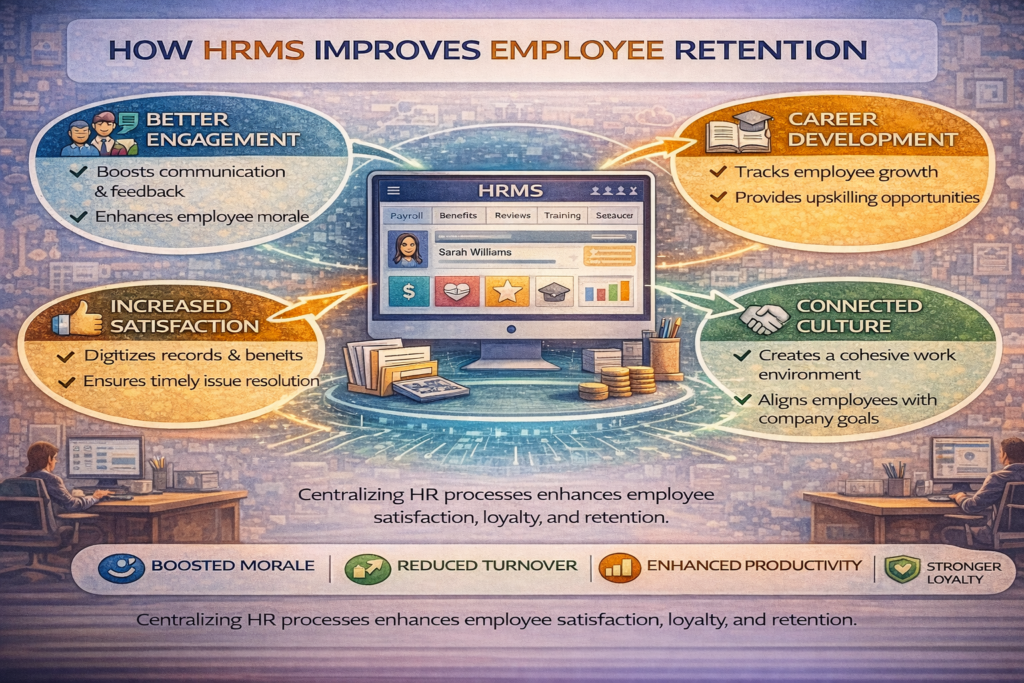
How HRMS Improves Employee Retention HRMS improves employee retention by streamlining HR processes, enhancing employee experience, improving transparency, enabling data-driven insights, and supporting engagement throughout the employee lifecycle. How HRMS Improves Employee Retention explains the direct connection between modern HR technology and reduced employee turnover by focusing on engagement, clarity, growth, and trust. Who This Is For HR leaders focused on reducing employee attrition Organizations struggling with engagement and turnover Business leaders investing in workforce stability Retention at a Glance: HRMS improves retention by removing HR friction, supporting employee growth, enabling timely feedback, and helping organizations proactively identify attrition risks. Why Employee Retention Is a Business Challenge High recruitment and onboarding costs Loss of institutional knowledge Reduced team morale and productivity Inconsistent employee experiences How HRMS Improves Employee Engagement Automated onboarding creates strong first impressions Employee self-service reduces HR dependency Clear policies and workflows increase transparency Consistent HR experiences across teams HRMS and Career Growth Visibility Centralized performance reviews and feedback Clear goal setting and progress tracking Access to training and development records Transparent career progression data Reducing Attrition Through Data-Driven Insights Early identification of disengagement trends Analysis of absenteeism and performance patterns Retention analytics for HR decision-making Proactive intervention before turnover occurs How HRMS Improves Trust and Transparency Accurate payroll and attendance records Clear leave balances and approvals Audit-ready HR data Reduced disputes and misunderstandings Business Outcomes of Using HRMS for Retention Lower employee turnover rates Improved employee satisfaction Stronger employer brand Higher long-term workforce stability FAQs Can HRMS really reduce employee turnover? Yes. HRMS improves engagement, transparency, and growth opportunities, which directly reduce employee turnover. Which HRMS features impact retention the most? Onboarding automation, self-service portals, performance management, and analytics have the greatest impact. Is HRMS useful for long-term employee retention? Yes. HRMS supports continuous engagement and data-driven improvements throughout the employee lifecycle. Who benefits most from HRMS-driven retention strategies? Organizations with growing teams, high attrition, or distributed workforces benefit the most. How quickly can HRMS impact retention? Improved engagement and reduced friction can be observed within months of implementation.

How HRMS Supports Remote Work
Blog

How HRMS Supports Remote Work

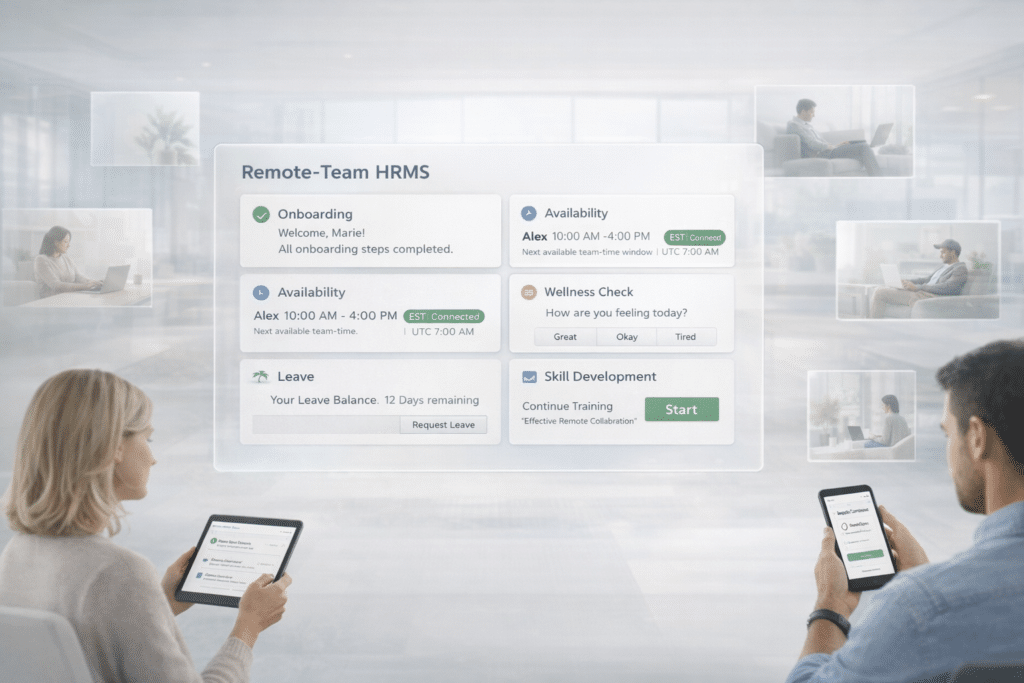
How HRMS Supports Remote Work HRMS supports remote work by centralizing HR operations, enabling secure self-service access, automating workflows, improving workforce visibility, and ensuring compliance for distributed and hybrid teams. How HRMS Supports Remote Work explains how modern HR management systems enable organizations to manage remote employees efficiently while maintaining productivity, compliance, and engagement. Who This Is For Organizations managing remote or hybrid teams HR leaders enabling location-independent work Businesses scaling distributed workforces Remote Work at a Glance: HRMS enables remote work by providing anytime access to HR tools, automating approvals, tracking attendance remotely, and maintaining centralized workforce data. Why Managing Remote Work Is Challenging Lack of visibility into attendance and productivity Manual HR processes across locations Delayed approvals and communication gaps Compliance risks for distributed employees How HRMS Enables Remote Workforce Management Cloud-based access to HR systems Centralized employee records Standardized HR policies across locations Secure data access from anywhere Employee Self-Service for Remote Teams Apply for leave and track balances remotely Access payslips and documents online Update personal and bank details securely Reduce dependency on HR for routine tasks Remote Attendance and Time Tracking Remote check-in and check-out Shift and schedule tracking for distributed teams Accurate work-hour visibility Integration with payroll calculations Workflow Automation and Digital Approvals Automated approval workflows Manager approvals from any location Reduced turnaround time for HR requests Audit-ready approval trails Compliance and Data Security for Remote Work Role-based access controls Centralized compliance documentation Accurate payroll and statutory reporting Secure handling of employee data Business Outcomes of Using HRMS for Remote Work Improved productivity for remote employees Consistent HR experience across locations Reduced administrative overhead Scalable remote workforce operations FAQs Can HRMS manage fully remote teams? Yes. HRMS centralizes HR operations and enables secure access for fully remote teams. Which HRMS features are essential for remote work? Employee self-service, remote attendance tracking, workflow automation, and analytics are essential. Is HRMS secure for remote employees? Yes. HRMS platforms use role-based access and security controls to protect employee data. Does HRMS support compliance for remote employees? Yes. HRMS maintains accurate records and ensures compliance across locations. Who should use HRMS for remote work? Organizations with distributed, hybrid, or remote-first teams benefit the most.

Payroll Automation Best Practices
Blog

Payroll Automation Best Practices

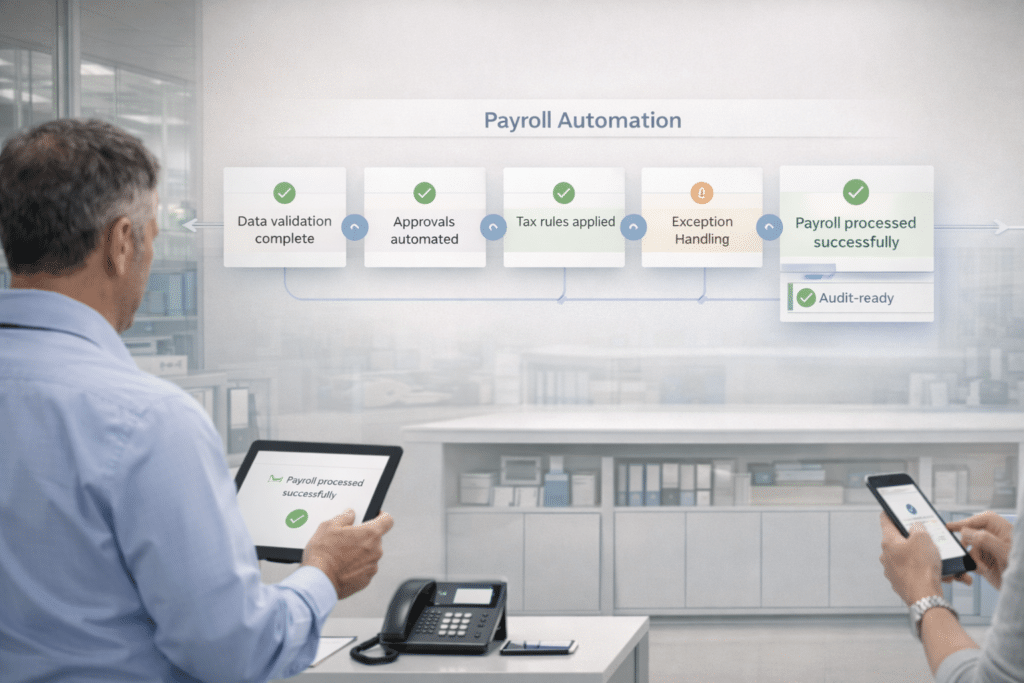
Payroll Automation Best Practices Payroll automation best practices help organizations calculate salaries, deductions, taxes, and payouts accurately by using automated workflows, integrated data, and compliance-driven controls. Payroll Automation Best Practices explains how organizations can reduce payroll errors, ensure compliance, and improve operational efficiency by following proven automation principles. Who This Guide Is For HR and payroll teams modernizing payroll operations Finance leaders focused on accuracy and cost control Organizations scaling payroll across teams or locations Best Practices at a Glance: Effective payroll automation relies on accurate data inputs, compliance rules, system integrations, audit readiness, and continuous optimization. What Is Payroll Automation? Automated salary and wage calculations Statutory tax and deduction processing Integrated attendance and leave data Automated payslip generation and reporting Why Payroll Automation Is Important Reduces manual payroll errors Ensures consistent compliance Saves time and administrative effort Improves employee trust and transparency Best Practice 1: Ensure Accurate Payroll Data Inputs Maintain clean employee master data Validate attendance and leave records Standardize payroll data sources Best Practice 2: Integrate Payroll with Attendance and Leave Automate payable days calculation Reduce payroll discrepancies Eliminate manual data reconciliation Best Practice 3: Automate Statutory Compliance Rules Apply tax and statutory deductions automatically Update payroll rules as regulations change Maintain audit-ready payroll records Best Practice 4: Enable Approval Workflows and Controls Multi-level payroll review and approval Exception handling and overrides Clear accountability for payroll changes Best Practice 5: Maintain Audit Trails and Reporting Track payroll changes and adjustments Generate compliance and audit reports Store historical payroll data securely Common Payroll Automation Mistakes to Avoid Ignoring data validation Overlooking compliance updates Relying on manual approvals Lack of payroll audit visibility Business Outcomes of Following Payroll Automation Best Practices Higher payroll accuracy Reduced payroll processing time Lower compliance risk Improved employee confidence in payroll FAQs What are payroll automation best practices? Payroll automation best practices include accurate data management, system integration, compliance automation, approval controls, and audit readiness. Can payroll automation reduce payroll errors? Yes. Automation minimizes manual calculations and reduces human error in payroll processing. Is payroll automation compliant with regulations? Yes. Modern payroll systems automatically apply statutory rules and maintain compliance records. Who should implement payroll automation? Organizations of all sizes processing recurring payroll benefit from automation. How often should payroll automation processes be reviewed? Payroll automation processes should be reviewed regularly to reflect regulatory and organizational changes.

HRMS Data Security Best Practices
Blog

HRMS Data Security Best Practices

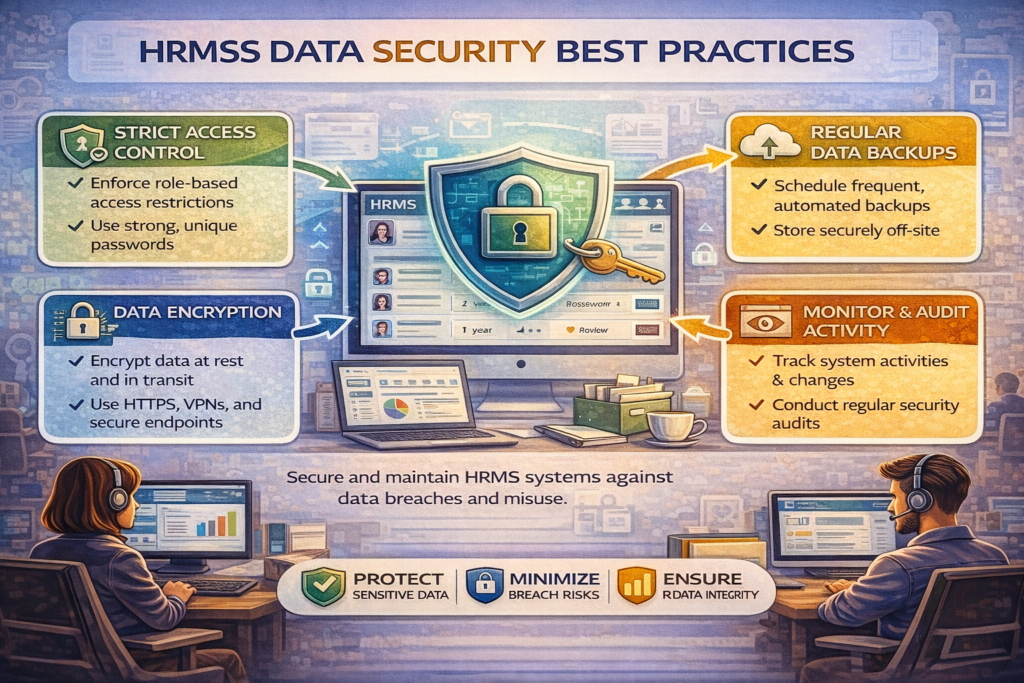
HRMS Data Security Best Practices HRMS data security best practices protect sensitive employee, payroll, and compliance data through role-based access control, encryption, monitoring, audit trails, and governance-driven security policies. HRMS Data Security Best Practices explains how organizations can safeguard employee information, reduce security risks, and maintain trust by applying proven security controls within HR management systems. Who This Guide Is For HR and IT leaders responsible for employee data protection Organizations handling payroll and sensitive workforce data Businesses aligning HR systems with security and compliance standards Security at a Glance: Effective HRMS security combines access controls, encryption, continuous monitoring, audit trails, and governance to protect employee data and reduce risk. Why HRMS Data Security Is Critical HRMS stores highly sensitive personal and payroll data Security breaches can lead to financial and reputational damage Regulatory non-compliance increases legal risk Employee trust depends on data protection Best Practice 1: Implement Role-Based Access Control (RBAC) Restrict data access based on job roles Prevent unauthorized viewing or editing of HR data Apply least-privilege access principles Best Practice 2: Encrypt HRMS Data Encrypt data at rest in databases Encrypt data in transit between systems Protect payroll and personal identifiers Best Practice 3: Enable Audit Trails and Activity Logging Track changes to employee and payroll records Log user access and system actions Support audits and investigations Best Practice 4: Secure Integrations and APIs Control data flow between HRMS and other systems Use secure authentication for integrations Monitor third-party access Best Practice 5: Establish HRMS Governance and Policies Define data ownership and responsibilities Regularly review access permissions Train employees on data security practices Common HRMS Data Security Risks Unauthorized system access Weak password practices Unmonitored integrations Lack of audit visibility Business Outcomes of Strong HRMS Data Security Reduced risk of data breaches Improved regulatory compliance Higher employee trust Stronger organizational resilience FAQs How secure is HRMS data? HRMS data is secure when protected through access controls, encryption, monitoring, and governance policies. What data security risks exist in HRMS? Risks include unauthorized access, weak credentials, unsecured integrations, and lack of monitoring. Who is responsible for HRMS data security? HR, IT, and organizational leadership share responsibility for HRMS data security. Is HRMS compliant with data protection regulations? Yes. Secure HRMS platforms support compliance by enforcing access control, audit trails, and data protection measures. How often should HRMS security be reviewed? HRMS security should be reviewed regularly and whenever organizational or regulatory changes occur.

How HRMS Reduces Operational Costs
Blog

How HRMS Reduces Operational Costs

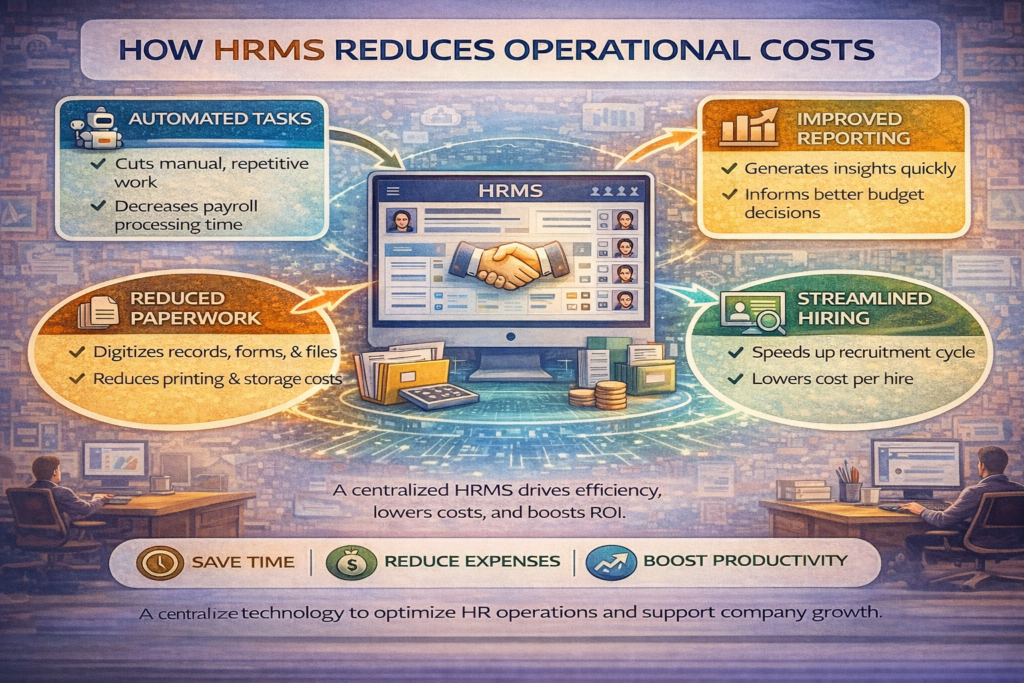
How HRMS Reduces Operational Costs HRMS reduces operational costs by automating HR and payroll processes, minimizing manual effort, reducing errors, improving workforce visibility, and lowering compliance and administrative overhead. How HRMS Reduces Operational Costs explains how organizations can achieve measurable cost savings by replacing fragmented manual processes with centralized, automated HR management systems. Who This Is For Business leaders focused on operational efficiency HR and finance teams managing workforce costs Organizations scaling operations without increasing overhead Cost Reduction at a Glance: HRMS lowers operational costs by reducing administrative labor, eliminating payroll errors, minimizing compliance risks, and improving workforce planning. Why Operational Costs Increase Without HRMS Manual HR and payroll processing High error correction and rework costs Fragmented HR systems and data silos Compliance penalties and audit risks Reducing Administrative and HR Labor Costs Automation of routine HR tasks Employee self-service for common requests Faster approvals and reduced HR workload Lower dependency on manual data entry Lowering Payroll Processing and Error Costs Automated salary and deduction calculations Integration with attendance and leave data Reduced payroll disputes and corrections Consistent payroll accuracy Reducing Compliance and Audit Costs Automated statutory rule enforcement Audit-ready payroll and HR records Reduced risk of fines and penalties Simplified compliance reporting Optimizing Workforce Planning and Utilization Real-time workforce visibility Better scheduling and resource allocation Reduced overtime and staffing inefficiencies Improved cost forecasting Lower IT and System Maintenance Costs Consolidation of multiple HR tools Reduced system integration overhead Lower maintenance and support effort Scalable HR infrastructure Business Outcomes of HRMS-Driven Cost Reduction Lower operational expenditure Improved cost predictability Higher return on HR technology investment Lean and scalable operations FAQs Does HRMS really reduce operational costs? Yes. HRMS reduces costs by automating processes, minimizing errors, and improving workforce efficiency. Which operational costs does HRMS reduce the most? HRMS significantly reduces administrative labor, payroll errors, compliance penalties, and IT overhead. How quickly can HRMS deliver cost savings? Organizations often see operational cost savings within months of HRMS implementation. Is HRMS cost-effective for small and mid-sized businesses? Yes. HRMS helps SMBs scale operations without proportionally increasing costs. Which departments benefit most from HRMS cost reduction? HR, payroll, finance, and operations teams benefit the most.

Digital Transformation for HR Teams
Blog

Digital Transformation for HR Teams

Digital Transformation for HR Teams Digital transformation for HR teams involves using technology to automate HR processes, improve employee experience, enable data-driven decisions, and scale workforce operations efficiently. Digital Transformation for HR Teams explains how modern HR departments evolve from manual, reactive operations into strategic, data-driven functions through automation, analytics, and integrated HR systems. Who This Is For HR leaders modernizing people operations Organizations replacing manual HR processes Businesses scaling workforce management Transformation at a Glance: HR digital transformation focuses on automation, employee self-service, real-time data visibility, compliance control, and scalable HR operations. What Is Digital Transformation in HR? Automation of core HR workflows Centralization of employee data Digitization of approvals and documentation Use of analytics for workforce decisions Why HR Teams Need Digital Transformation Manual HR processes slow down operations Lack of data visibility limits decision-making Employee expectations for digital experiences are rising Compliance complexity continues to increase Core Pillars of HR Digital Transformation 1. Process Automation Automated onboarding and offboarding Digital leave, attendance, and payroll workflows Reduced manual data entry and paperwork 2. Employee Experience Enablement Employee self-service portals Anytime access to HR information Faster request resolution 3. Data-Driven HR Decisions Workforce analytics and dashboards Attrition and engagement insights Better workforce planning 4. Compliance and Governance Standardized HR policies Audit-ready HR records Reduced compliance risk 5. Scalability and Integration Unified HR, payroll, and attendance systems Support for multi-location teams Future-ready HR infrastructure Business Outcomes of Digital HR Transformation Improved HR efficiency and productivity Enhanced employee engagement Lower operational costs Stronger strategic role for HR FAQs What does digital transformation mean for HR teams? It means using technology to automate HR processes, improve employee experience, and enable data-driven workforce decisions. What are the benefits of digital transformation in HR? Benefits include efficiency, better compliance, improved employee satisfaction, and scalable HR operations. How does digital transformation change HR roles? HR teams shift from administrative tasks to strategic workforce planning and engagement. Is digital transformation expensive for HR teams? Modern HRMS platforms make digital transformation cost-effective and scalable. Who should lead digital transformation in HR? HR leadership, supported by IT and business stakeholders, should lead transformation initiatives.

How to Manage Multi-Country Payroll
Blog

How to Manage Multi-Country Payroll

How to Manage Multi-Country Payroll in 2026 To manage multi-country payroll in 2026, centralize oversight with a unified platform while localizing compliance through country-specific tax rules, currency handling, payment methods, and partner networks that cover statutory filings and labor laws. This guide explains strategies for running payroll across multiple countries and how EHRMSNext supports global payroll operations with local compliance. Why Multi-Country Payroll Is Complex 160+ countries with unique tax codes, filing deadlines, and social security rules Multiple currencies, pay frequencies, and payment methods (bank transfer, cash, mobile) GDPR/CCPA data residency requirements plus local labor law variations Summary at a Glance: Global payroll success requires centralized strategy + localized execution through unified platforms, local experts, and automated compliance monitoring. Step 1: Choose Your Global Payroll Model Key Takeaway: Pick centralized, decentralized, or hybrid based on your scale and needs. Centralized: Single provider/platform manages all countries Decentralized: Local teams handle each country Hybrid: Global platform + local payroll partners (most common) Step 2: Build Country Compliance Matrix Key Takeaway: Document requirements for each country before going live. Country Pay Frequency Tax Filing Social Security USA Bi-weekly Monthly (941) FICA UK Monthly RTI (real-time) NIC India Monthly TDS Monthly PF/ESIC Germany Monthly ELStAM Social Insurance Step 3: Centralize Data & Reporting Key Takeaway: One source of truth across currencies and countries. Unify employee master data, payroll results, and compliance records Convert local currencies to reporting currency for consolidated P&L Generate global headcount, cost, and compliance dashboards Step 4: Automate Compliance & Tax Rules Key Takeaway: Real-time tax table updates prevent penalties. Configure country-specific tax codes, brackets, and deductions Automate statutory filings (W-2, P60, Form 16, P45) Track social security caps and contribution limits per country Step 5: Partner with Local Experts Key Takeaway: Technology + local knowledge = compliance confidence. Global platforms (EHRMSNext) + local payroll bureaus Employer of Record (EOR) for complex markets Legal experts for labor law and contract compliance Step 6: Handle Payments & Currency Key Takeaway: Get employees paid correctly, on time, everywhere. Support local payment methods (ACH, SEPA, UPI, mobile wallets) Manage FX exposure through hedging or payment timing Handle split payments across currencies for expats/remote workers Step 7: Monitor & Audit Continuously Key Takeaway: Compliance is never “set it and forget it.” Real-time compliance alerts for tax rate changes Monthly reconciliation of payroll vs general ledger Quarterly audits of high-risk countries How EHRMSNext Manages Multi-Country Payroll Key Takeaway: EHRMSNext unifies global oversight with local compliance. Country-specific tax tables and statutory rules Multi-currency payroll processing and reporting Local payment method support + bank integrations Compliance dashboards across all locations Is EHRMSNext Right for Global Payroll? ✅ You operate in 3+ countries with different tax/pay rules ✅ Manual payroll reconciliation takes too much time ✅ You need unified reporting across currencies/locations FAQs: Multi-Country Payroll Management Should I centralize or decentralize global payroll? Hybrid works best: centralized platform for oversight + local partners for compliance execution. How do I handle currency conversion risks? Lock exchange rates at payroll cut-off or hedge through forward contracts for predictable costs. What are common multi-country payroll mistakes? Missing tax table updates, inconsistent data formats, ignoring local payment preferences. Do I need local entities in every country? No, Employer of Record (EOR) solutions let you pay legally without local incorporation. How does EHRMSNext support global payroll? EHRMSNext handles multi-country tax rules, currency conversion, local payments, and unified reporting.

How to Improve HR Compliance Accuracy
Blog

How to Improve HR Compliance Accuracy

How to Improve HR Compliance Accuracy Improving HR compliance accuracy involves standardizing HR policies, centralizing compliance data, automating statutory tracking, and conducting regular audits to ensure adherence to labor laws and regulations. This guide explains how to improve HR compliance accuracy using a structured framework that covers common compliance errors, preventive controls, automation, and best practices for consistent regulatory adherence. Who This Is For HR leaders and compliance officers Payroll and operations managers Audit and risk management teams Organizations operating under multiple labor regulations Summary: HR compliance accuracy improves when policies are standardized, data is centralized, compliance is automated, and regular audits are performed. Why HR Compliance Accuracy Matters Prevents legal penalties and regulatory violations Protects employee rights and benefits Improves audit readiness and transparency Reduces operational risk and rework Builds organizational trust and credibility Common Causes of HR Compliance Errors Manual record-keeping and fragmented systems Frequent changes in labor laws Inconsistent policy interpretation Lack of compliance ownership Poor documentation and audit trails Step-by-Step Framework to Improve HR Compliance Accuracy Standardize HR policies and compliance procedures Centralize employee and compliance records Automate statutory tracking and alerts Implement approval workflows and validations Conduct regular compliance audits and reviews HR Compliance Controls That Improve Accuracy Automated compliance alerts and reminders Audit trails for policy and data changes Role-based access controls Version-controlled HR policies Compliance dashboards and reports How Automation Improves HR Compliance Accuracy Ensures consistent application of labor laws Reduces manual errors and omissions Tracks statutory deadlines automatically Maintains real-time compliance visibility Supports audit-ready documentation How to Measure HR Compliance Accuracy Reduction in compliance violations Fewer audit findings and penalties Improved on-time statutory filings Higher compliance reporting accuracy FAQs What is HR compliance accuracy? HR compliance accuracy refers to how correctly an organization follows labor laws, statutory requirements, and HR regulations. Why is HR compliance accuracy important? It helps organizations avoid legal penalties, protect employee rights, and maintain regulatory trust. What causes HR compliance errors? Common causes include manual processes, fragmented data, frequent law changes, and lack of compliance controls. Can HR compliance accuracy be automated? Yes. HR software and HRMS platforms can automate compliance tracking, alerts, and reporting. Who is responsible for HR compliance accuracy? HR compliance accuracy is a shared responsibility among HR, payroll, finance, and compliance teams.

How To Reduce Payroll Errors
Blog

How To Reduce Payroll Errors

How to Reduce Payroll Errors Reducing payroll errors involves standardizing payroll processes, validating employee and attendance data, automating calculations, and performing regular payroll reviews to ensure accurate and compliant salary payments. This guide explains how to reduce payroll errors using a structured payroll accuracy framework, including common causes of payroll mistakes, prevention controls, automation, and best practices. Who This Is For Payroll and HR professionals Finance and accounting teams Compliance and audit managers Organizations aiming to improve payroll accuracy Summary: Payroll errors can be reduced by combining process standardization, automation, data validation, and post-payroll reviews. Common Causes of Payroll Errors Manual data entry and spreadsheet dependency Incorrect attendance or leave records Misconfigured salary structures Changes in tax or statutory regulations Lack of payroll review and approval controls Step-by-Step Framework to Reduce Payroll Errors Standardize payroll inputs and salary structures Validate attendance, overtime, and leave data Automate payroll calculations and deductions Implement approval workflows before payroll runs Perform payroll reconciliation after processing Payroll Controls That Prevent Errors Pre-payroll validation checks Multi-level payroll approvals Exception reports for anomalies Audit trails and access controls Post-payroll reconciliation How Automation Helps Reduce Payroll Errors Eliminates manual calculations Applies statutory rules consistently Integrates attendance directly with payroll Reduces rework and corrections Improves compliance and audit readiness How to Measure Payroll Accuracy Improvements Reduction in payroll corrections and adjustments Lower employee payroll complaints Improved on-time payroll completion Fewer compliance violations or penalties FAQs What are common payroll errors? Common payroll errors include incorrect salary calculations, wrong deductions, overtime mistakes, and delayed payments. How can payroll errors be prevented? Payroll errors can be prevented by standardizing processes, validating data, automating payroll, and performing regular audits. Does payroll software reduce payroll errors? Yes. Payroll software reduces errors by automating calculations, enforcing rules, and integrating attendance and compliance data. How often should payroll be reviewed? Payroll should be reviewed before and after every payroll cycle to identify and correct errors early. Who is responsible for payroll accuracy? Payroll accuracy is a shared responsibility between payroll teams, HR, finance, and system administrators.

Step-by-Step HRMS Migration Guide
Blog

Step-by-Step HRMS Migration Guide

Step-by-Step HRMS Migration Guide HRMS migration is the process of transferring employee data, HR workflows, and payroll operations from a legacy system or spreadsheets to a new HRMS platform while ensuring data accuracy, compliance, and minimal disruption. This step-by-step HRMS migration guide explains how organizations can plan, execute, and validate HRMS migration successfully, including data scope, risks, best practices, and post-migration checks. Who This Is For HR and payroll leaders IT and system administrators Digital transformation teams Organizations moving from legacy HR systems Summary: HRMS migration helps organizations modernize HR operations by moving data and processes into a centralized, automated HRMS platform with minimal risk. What Data Is Migrated During HRMS Migration? Employee master and personal information Job roles, departments, and org structure Attendance, leave, and shift records Payroll history and salary structures Compliance and statutory records Step-by-Step HRMS Migration Process Assess current HR systems and data sources Define migration scope, timelines, and responsibilities Clean, validate, and standardize HR data Configure HRMS modules and workflows Migrate employee and payroll data Test migrated data for accuracy and completeness Train users and prepare for go-live Go live and monitor system performance Pre-Migration Checklist Identify data owners and stakeholders Back up existing HR and payroll data Map legacy data fields to HRMS fields Review compliance and data privacy requirements Set success criteria for migration Common HRMS Migration Risks Data loss or corruption Downtime during payroll cycles Compliance gaps User adoption challenges Integration failures with payroll or attendance systems HRMS Migration vs HRMS Implementation HRMS migration focuses on moving existing data and processes HRMS implementation focuses on configuring and deploying the system Migration is data-centric; implementation is system-centric Both are required for successful HRMS adoption Best Practices for Successful HRMS Migration Start with clean and validated data Run parallel payroll testing before go-live Communicate clearly with all stakeholders Provide training and documentation Monitor post-migration performance closely FAQs What is HRMS migration? HRMS migration is the process of moving HR and payroll data from legacy systems to a new HRMS platform. How long does HRMS migration take? HRMS migration typically takes a few weeks to a few months, depending on data volume and complexity. What data is migrated during HRMS migration? Employee data, payroll history, attendance records, compliance data, and organizational structure are migrated. What are common HRMS migration challenges? Common challenges include data quality issues, downtime risks, compliance gaps, and user adoption. Can HRMS migration be automated? Yes. HRMS migration can be partially automated using migration tools and HRMS import utilities.

Scroll to Top