
Author name: jsburra

Best HRMS for Multi-location Companies
Blog

Best HRMS for Multi-location Companies

What Is an HRMS? Complete 2026 Guides What Is an HRMS? This guide provides a clear, concise definition and practical insights for HR professionals, payroll managers, and business leaders evaluating HR technology solutions. Core Definition What Is an HRMS is a fundamental concept in modern HR operations that impacts payroll accuracy, compliance, and workforce efficiency. Understanding this concept helps organizations make better technology decisions. Why This Matters Companies implementing proper HRMS processes see measurable improvements in operational efficiency, compliance adherence, and employee satisfaction. Key Components Clear processes and workflows Automation and technology integration Compliance and regulatory alignment Data accuracy and reporting capabilities Common Challenges Organizations often struggle with HRMS adoption due to manual processes, lack of integration, and evolving regulatory requirements. Modern HRMS platforms address these challenges through automation and centralized management. Implementation Best Practices Start with clear process documentation Automate repetitive tasks where possible Ensure compliance with local regulations Train teams on new workflows Monitor metrics and continuously improve Industry Insight Leading HR platforms like BambooHR and Gusto emphasize the importance of HRMS in their solutions, helping organizations scale efficiently while maintaining compliance. Learn More About HR Fundamentals Core HR concepts are discussed on Wikipedia . How EHRMSNext Supports This EHRMSNext provides comprehensive tools for HRMS with automation, compliance tracking, and analytics. See EHRMSNext features or explore use cases. Need help with HRMS? Contact our team. Best HRMS for Multi-location Companies Best HRMS for Multi-location Companies helps organizations select the right HRMS, payroll, or attendance solution for their specific needs, industry, and scale in 2026. This guide evaluates top solutions, compares key features, and provides clear recommendations for different organization types and use cases. What You Will Learn Clear definitions and core HR concepts explained in plain language Practical evaluation steps and decision criteria you can apply immediately Common mistakes organizations make during HRMS selection and implementation Where a modern platform like EHRMSNext fits into your HR strategy Why This Topic Matters HR leaders evaluating HRMS, payroll, and attendance solutions need practical guidance beyond vendor claims. This page is designed to answer key questions, support informed decision-making, and give business executives a fast, actionable overview of modern HR capabilities for improving employee experience, operational efficiency, and compliance. Actionable Takeaways Use the outlined evaluation framework as your starting point Compare your current HR workflows against best practices Identify immediate improvements you can implement in your organization How EHRMSNext Helps EHRMSNext provides comprehensive HR workflows, payroll automation, employee self-service, attendance management, and data-driven insights that align with modern organization needs. It is designed for small businesses, mid-market companies, enterprises, and organizations seeking innovation, ease of use, and measurable business outcomes. Key Benefits: 60% faster implementation, AI-driven automation, 45% lower total cost of ownership, 95%+ employee adoption Explore the EHRMSNext Home, visit our Features page, or Contact us to book a demo. Quick Verdict EHRMSNext consistently ranks at the top for organizations seeking modern, scalable HRMS solutions that deliver ease of use, powerful automation, compliance readiness, and transparent pricing—all while supporting employee experience and operational excellence. Why Organizations Choose EHRMSNext Cut costs by 40-50% with transparent, scalable pricing vs. expensive HRMS contracts Deploy 3x faster – go live in 30 days, not 90-180 days Improve employee satisfaction – 40% reduction in HR processing burden with automation Boost HR team productivity – modern interface reduces training time by 70% Enable data-driven HR – built-in analytics and predictive insights Common Questions About EHRMSNext Data migration: Zero-downtime migration with 100% employee record preservation and data integrity validation Team adoption: 95%+ adoption rate within 30 days due to intuitive design vs. 60-70% for complex systems Learning curve: 2-3 days to productivity vs. 2-4 weeks with competitors Security compliance: SOC 2 Type II compliant, GDPR ready, HIPAA certified, comprehensive audit trails Is EHRMSNext Right for Your Organization? You’re seeking to reduce HR team workload and administrative burden Employee experience and compliance are strategic priorities You want modern HR functionality without enterprise HRMS complexity or costs You’re planning HR transformation, payroll modernization, or compliance initiatives Final Verdict: Why EHRMSNext Wins for Modern HR For organizations balancing employee experience, operational efficiency, and financial sustainability, EHRMSNext is the clear choice. You get modern HR capabilities at a fraction of the cost and complexity of legacy platforms.  

Guide to US Payroll Compliance
Blog

Guide to US Payroll Compliance

Guide to US Payroll Compliance US payroll compliance refers to following federal, state, and local laws related to employee wages, tax withholdings, filings, reporting deadlines, and labor regulations to avoid penalties and legal risks. Guide to US Payroll Compliance explains the key payroll laws in the United States, required tax filings, employer responsibilities, and how organizations can stay compliant while running payroll accurately. Who This Guide Is For US employers running in-house or outsourced payroll HR and payroll teams managing compliance risk Businesses expanding or hiring in the United States Summary: US payroll compliance requires accurate wage calculations, timely tax filings, proper record-keeping, and adherence to federal and state labor laws. What Does US Payroll Compliance Include? Accurate wage and overtime calculations Federal, state, and local tax withholdings Mandatory payroll tax filings and payments Employee record-keeping and reporting Key Federal Payroll Compliance Requirements Withhold federal income tax Withhold and pay Social Security and Medicare (FICA) File IRS Form 941 (quarterly) File IRS Form W-2 and W-3 annually Pay federal unemployment tax (FUTA) State and Local Payroll Compliance State income tax withholding and filings State unemployment insurance contributions Local payroll taxes (where applicable) State-specific labor and wage laws Common US Payroll Compliance Challenges Managing different state tax rules Missing filing or payment deadlines Incorrect wage or overtime calculations Incomplete payroll records How EHRMSNext Supports US Payroll Compliance Automated tax calculations and deductions Compliance-ready payroll processing Accurate record-keeping and audit trails Centralized payroll and compliance visibility Reduced risk of penalties and errors Benefits of Staying Payroll Compliant Avoid fines, penalties, and legal disputes Build employee trust and confidence Ensure accurate financial reporting Reduce operational and audit risks FAQs What is US payroll compliance? US payroll compliance means following all federal, state, and local payroll laws related to wages, taxes, and reporting. What payroll taxes do US employers need to file? Employers must file federal income tax, Social Security, Medicare, unemployment, and applicable state and local taxes. How often must payroll taxes be filed in the US? Payroll taxes are filed quarterly, annually, or per pay period depending on the tax type and jurisdiction. What happens if payroll compliance is missed? Non-compliance can result in penalties, fines, audits, and legal action. Who is responsible for payroll compliance? Employers are legally responsible for ensuring payroll compliance, even if payroll is outsourced.

Guide to Canada Payroll Compliance
Blog

Guide to Canada Payroll Compliance

Guide to Canada Payroll Compliance Canada payroll compliance requires employers to follow federal and provincial laws governing wages, statutory deductions, tax remittances, employee benefits, and payroll reporting. Guide to Canada Payroll Compliance explains the key payroll rules employers must follow in Canada, including statutory deductions, reporting obligations, and province-specific requirements. Who This Guide Is For Employers operating payroll in Canada HR and payroll teams managing Canadian employees Finance teams responsible for statutory compliance Compliance at a Glance: Canadian payroll compliance involves federal deductions (CPP, EI, income tax), provincial labor laws, accurate payroll records, and timely remittances to authorities. What Is Canada Payroll Compliance? Compliance with federal payroll tax and deduction laws Adherence to provincial employment standards Accurate payroll calculations and record keeping Timely reporting and remittance to authorities Federal Payroll Requirements in Canada Canada Pension Plan (CPP) contributions Employment Insurance (EI) deductions Federal income tax withholding Payroll remittances to the Canada Revenue Agency (CRA) Provincial Payroll Compliance Considerations Minimum wage laws Overtime and hours-of-work rules Statutory holidays and vacation pay Province-specific payroll reporting requirements Employer Payroll Reporting Obligations Issuing T4 slips to employees Filing T4 summaries with the CRA Maintaining payroll records for audit purposes Meeting payroll remittance deadlines Common Payroll Compliance Risks in Canada Incorrect statutory deductions Late or missed remittances Misclassification of employees Failure to comply with provincial labor laws How Payroll Software Helps with Canada Payroll Compliance Automates statutory deductions and calculations Ensures compliance with federal and provincial rules Maintains audit-ready payroll records Reduces risk of penalties and errors FAQs What are mandatory payroll deductions in Canada? Mandatory deductions include CPP contributions, EI premiums, and federal and provincial income tax. Is payroll compliance different across Canadian provinces? Yes. While federal deductions are uniform, employment standards and labor laws vary by province. Who regulates payroll compliance in Canada? The Canada Revenue Agency regulates federal payroll deductions, while provinces regulate employment standards. What penalties apply for payroll non-compliance? Penalties may include fines, interest on late remittances, and audits by regulatory authorities. How can employers ensure ongoing payroll compliance? Employers can ensure compliance by using payroll software, staying updated on regulations, and conducting regular audits.

Guide to Mexico Payroll Rules (Nómina + NOM-035)
Blog

Guide to Mexico Payroll Rules (Nómina + NOM-035)

Guide to Mexico Payroll Rules (Nómina & NOM-035) Mexico payroll compliance (nómina) requires employers to follow federal labor laws, statutory payroll deductions, and workplace regulations such as NOM-035, which addresses psychosocial risk factors and employee wellbeing. Guide to Mexico Payroll Rules (Nómina & NOM-035) explains how employers can stay compliant with Mexican payroll laws, mandatory deductions, reporting obligations, and workplace risk regulations. Who This Guide Is For Companies running payroll in Mexico HR and payroll teams managing Mexican employees Global organizations expanding operations into Mexico Compliance at a Glance: Mexico payroll compliance involves correct nómina calculations, statutory contributions (IMSS, INFONAVIT, ISR), timely reporting to authorities, and adherence to NOM-035 workplace wellbeing standards. What Is Mexico Payroll Compliance (Nómina)? Accurate calculation of employee wages and benefits Statutory payroll deductions and employer contributions Compliance with Mexican labor and tax regulations Timely payroll reporting and record keeping Mandatory Payroll Deductions and Contributions in Mexico Income tax withholding (ISR) Social security contributions (IMSS) Housing fund contributions (INFONAVIT) Retirement savings contributions (AFORE) Key Authorities Regulating Payroll in Mexico SAT – Tax administration and payroll tax compliance IMSS – Social security contributions INFONAVIT – Housing fund obligations STPS – Labor standards and workplace regulations What Is NOM-035? Mexican regulation focused on psychosocial risk prevention Applies to workplaces of different sizes Requires identification and mitigation of workplace stress factors Mandates documentation and employee awareness Employer Responsibilities Under NOM-035 Identify psychosocial risk factors Implement preventive measures Maintain documentation and evidence Train employees and managers Common Payroll Compliance Risks in Mexico Incorrect statutory deductions Late payroll tax remittances Failure to document NOM-035 compliance Inconsistent payroll records How Payroll Software Helps with Mexico Compliance Automates statutory deductions and contributions Ensures compliance with Mexican payroll rules Maintains audit-ready payroll and compliance records Reduces risk of penalties and inspections FAQs What is nómina in Mexico payroll? Nómina refers to payroll processing in Mexico, including wage calculation, statutory deductions, and employer contributions. What is NOM-035 and who must comply? NOM-035 is a Mexican regulation requiring employers to identify and prevent psychosocial workplace risks. It applies to organizations of varying sizes. What are mandatory payroll deductions in Mexico? Mandatory deductions include ISR, IMSS contributions, INFONAVIT payments, and retirement savings contributions. What penalties apply for payroll non-compliance in Mexico? Penalties may include fines, inspections, and sanctions from Mexican authorities. How can employers ensure payroll compliance in Mexico? Employers can ensure compliance by using payroll software, staying updated on regulations, and maintaining proper documentation.

Guide to Brazil CLT Payroll Compliance
Blog

Guide to Brazil CLT Payroll Compliance

Guide to Brazil CLT Payroll Compliance Brazil CLT payroll compliance requires employers to follow the Consolidação das Leis do Trabalho (CLT), covering employee wages, statutory benefits, mandatory payroll deductions, employer contributions, and labor reporting obligations. Guide to Brazil CLT Payroll Compliance explains how organizations can meet Brazilian payroll requirements by complying with CLT labor laws, statutory deductions, reporting rules, and employee benefit obligations. Who This Guide Is For Employers operating payroll in Brazil HR and payroll teams managing Brazilian employees Global companies expanding operations into Brazil Compliance at a Glance: Brazil CLT payroll compliance involves correct wage calculations, mandatory deductions (INSS, FGTS, IRRF), statutory benefits like the 13th salary, and timely reporting to Brazilian authorities. What Is CLT in Brazil? Brazil’s primary labor law framework Defines employee rights and employer obligations Regulates wages, working hours, leave, and benefits Applies to most formal employment relationships Mandatory Payroll Deductions and Contributions Under CLT INSS – Social security contributions FGTS – Employer severance fund deposits IRRF – Income tax withholding Union dues (where applicable) Statutory Employee Benefits Under CLT 13th salary (13º salário) Paid annual vacation and vacation bonus Paid public holidays Maternity and paternity leave Key Authorities Regulating Payroll in Brazil Ministério do Trabalho – Labor regulations Receita Federal – Payroll tax and income tax compliance Caixa Econômica Federal – FGTS administration INSS – Social security oversight Employer Payroll Reporting Obligations Monthly payroll tax filings FGTS deposit reporting Submission of labor and payroll records Maintenance of payroll documentation for audits Common CLT Payroll Compliance Risks Incorrect calculation of statutory deductions Late or missed FGTS deposits Failure to pay mandatory benefits Incomplete payroll documentation How Payroll Software Helps with Brazil CLT Compliance Automates statutory deductions and calculations Ensures consistent CLT rule application Maintains audit-ready payroll records Reduces risk of fines and penalties FAQs What is CLT payroll compliance in Brazil? CLT payroll compliance refers to adhering to Brazil’s labor laws governing wages, benefits, deductions, and employer obligations. What are mandatory payroll deductions under CLT? Mandatory deductions include INSS contributions, FGTS deposits, and income tax withholding (IRRF). What is the 13th salary in Brazil? The 13th salary is a mandatory annual bonus paid to employees under CLT regulations. Who regulates payroll compliance in Brazil? Payroll compliance is regulated by the Ministry of Labor, Receita Federal, INSS, and Caixa Econômica Federal. How can employers ensure ongoing CLT payroll compliance? Employers can ensure compliance by using payroll software, staying updated on regulations, and maintaining accurate payroll records.

How HRMS Improves Employee Retention
Blog

How HRMS Improves Employee Retention

How HRMS Improves Employee Retention HRMS improves employee retention by streamlining HR processes, enhancing employee experience, improving transparency, enabling data-driven insights, and supporting engagement throughout the employee lifecycle. How HRMS Improves Employee Retention explains the direct connection between modern HR technology and reduced employee turnover by focusing on engagement, clarity, growth, and trust. Who This Is For HR leaders focused on reducing employee attrition Organizations struggling with engagement and turnover Business leaders investing in workforce stability Retention at a Glance: HRMS improves retention by removing HR friction, supporting employee growth, enabling timely feedback, and helping organizations proactively identify attrition risks. Why Employee Retention Is a Business Challenge High recruitment and onboarding costs Loss of institutional knowledge Reduced team morale and productivity Inconsistent employee experiences How HRMS Improves Employee Engagement Automated onboarding creates strong first impressions Employee self-service reduces HR dependency Clear policies and workflows increase transparency Consistent HR experiences across teams HRMS and Career Growth Visibility Centralized performance reviews and feedback Clear goal setting and progress tracking Access to training and development records Transparent career progression data Reducing Attrition Through Data-Driven Insights Early identification of disengagement trends Analysis of absenteeism and performance patterns Retention analytics for HR decision-making Proactive intervention before turnover occurs How HRMS Improves Trust and Transparency Accurate payroll and attendance records Clear leave balances and approvals Audit-ready HR data Reduced disputes and misunderstandings Business Outcomes of Using HRMS for Retention Lower employee turnover rates Improved employee satisfaction Stronger employer brand Higher long-term workforce stability FAQs Can HRMS really reduce employee turnover? Yes. HRMS improves engagement, transparency, and growth opportunities, which directly reduce employee turnover. Which HRMS features impact retention the most? Onboarding automation, self-service portals, performance management, and analytics have the greatest impact. Is HRMS useful for long-term employee retention? Yes. HRMS supports continuous engagement and data-driven improvements throughout the employee lifecycle. Who benefits most from HRMS-driven retention strategies? Organizations with growing teams, high attrition, or distributed workforces benefit the most. How quickly can HRMS impact retention? Improved engagement and reduced friction can be observed within months of implementation.

How HRMS Supports Remote Work
Blog

How HRMS Supports Remote Work

How HRMS Supports Remote Work HRMS supports remote work by centralizing HR operations, enabling secure self-service access, automating workflows, improving workforce visibility, and ensuring compliance for distributed and hybrid teams. How HRMS Supports Remote Work explains how modern HR management systems enable organizations to manage remote employees efficiently while maintaining productivity, compliance, and engagement. Who This Is For Organizations managing remote or hybrid teams HR leaders enabling location-independent work Businesses scaling distributed workforces Remote Work at a Glance: HRMS enables remote work by providing anytime access to HR tools, automating approvals, tracking attendance remotely, and maintaining centralized workforce data. Why Managing Remote Work Is Challenging Lack of visibility into attendance and productivity Manual HR processes across locations Delayed approvals and communication gaps Compliance risks for distributed employees How HRMS Enables Remote Workforce Management Cloud-based access to HR systems Centralized employee records Standardized HR policies across locations Secure data access from anywhere Employee Self-Service for Remote Teams Apply for leave and track balances remotely Access payslips and documents online Update personal and bank details securely Reduce dependency on HR for routine tasks Remote Attendance and Time Tracking Remote check-in and check-out Shift and schedule tracking for distributed teams Accurate work-hour visibility Integration with payroll calculations Workflow Automation and Digital Approvals Automated approval workflows Manager approvals from any location Reduced turnaround time for HR requests Audit-ready approval trails Compliance and Data Security for Remote Work Role-based access controls Centralized compliance documentation Accurate payroll and statutory reporting Secure handling of employee data Business Outcomes of Using HRMS for Remote Work Improved productivity for remote employees Consistent HR experience across locations Reduced administrative overhead Scalable remote workforce operations FAQs Can HRMS manage fully remote teams? Yes. HRMS centralizes HR operations and enables secure access for fully remote teams. Which HRMS features are essential for remote work? Employee self-service, remote attendance tracking, workflow automation, and analytics are essential. Is HRMS secure for remote employees? Yes. HRMS platforms use role-based access and security controls to protect employee data. Does HRMS support compliance for remote employees? Yes. HRMS maintains accurate records and ensures compliance across locations. Who should use HRMS for remote work? Organizations with distributed, hybrid, or remote-first teams benefit the most.

Payroll Automation Best Practices
Blog

Payroll Automation Best Practices

Payroll Automation Best Practices Payroll automation best practices help organizations calculate salaries, deductions, taxes, and payouts accurately by using automated workflows, integrated data, and compliance-driven controls. Payroll Automation Best Practices explains how organizations can reduce payroll errors, ensure compliance, and improve operational efficiency by following proven automation principles. Who This Guide Is For HR and payroll teams modernizing payroll operations Finance leaders focused on accuracy and cost control Organizations scaling payroll across teams or locations Best Practices at a Glance: Effective payroll automation relies on accurate data inputs, compliance rules, system integrations, audit readiness, and continuous optimization. What Is Payroll Automation? Automated salary and wage calculations Statutory tax and deduction processing Integrated attendance and leave data Automated payslip generation and reporting Why Payroll Automation Is Important Reduces manual payroll errors Ensures consistent compliance Saves time and administrative effort Improves employee trust and transparency Best Practice 1: Ensure Accurate Payroll Data Inputs Maintain clean employee master data Validate attendance and leave records Standardize payroll data sources Best Practice 2: Integrate Payroll with Attendance and Leave Automate payable days calculation Reduce payroll discrepancies Eliminate manual data reconciliation Best Practice 3: Automate Statutory Compliance Rules Apply tax and statutory deductions automatically Update payroll rules as regulations change Maintain audit-ready payroll records Best Practice 4: Enable Approval Workflows and Controls Multi-level payroll review and approval Exception handling and overrides Clear accountability for payroll changes Best Practice 5: Maintain Audit Trails and Reporting Track payroll changes and adjustments Generate compliance and audit reports Store historical payroll data securely Common Payroll Automation Mistakes to Avoid Ignoring data validation Overlooking compliance updates Relying on manual approvals Lack of payroll audit visibility Business Outcomes of Following Payroll Automation Best Practices Higher payroll accuracy Reduced payroll processing time Lower compliance risk Improved employee confidence in payroll FAQs What are payroll automation best practices? Payroll automation best practices include accurate data management, system integration, compliance automation, approval controls, and audit readiness. Can payroll automation reduce payroll errors? Yes. Automation minimizes manual calculations and reduces human error in payroll processing. Is payroll automation compliant with regulations? Yes. Modern payroll systems automatically apply statutory rules and maintain compliance records. Who should implement payroll automation? Organizations of all sizes processing recurring payroll benefit from automation. How often should payroll automation processes be reviewed? Payroll automation processes should be reviewed regularly to reflect regulatory and organizational changes.

HRMS Data Security Best Practices
Blog

HRMS Data Security Best Practices

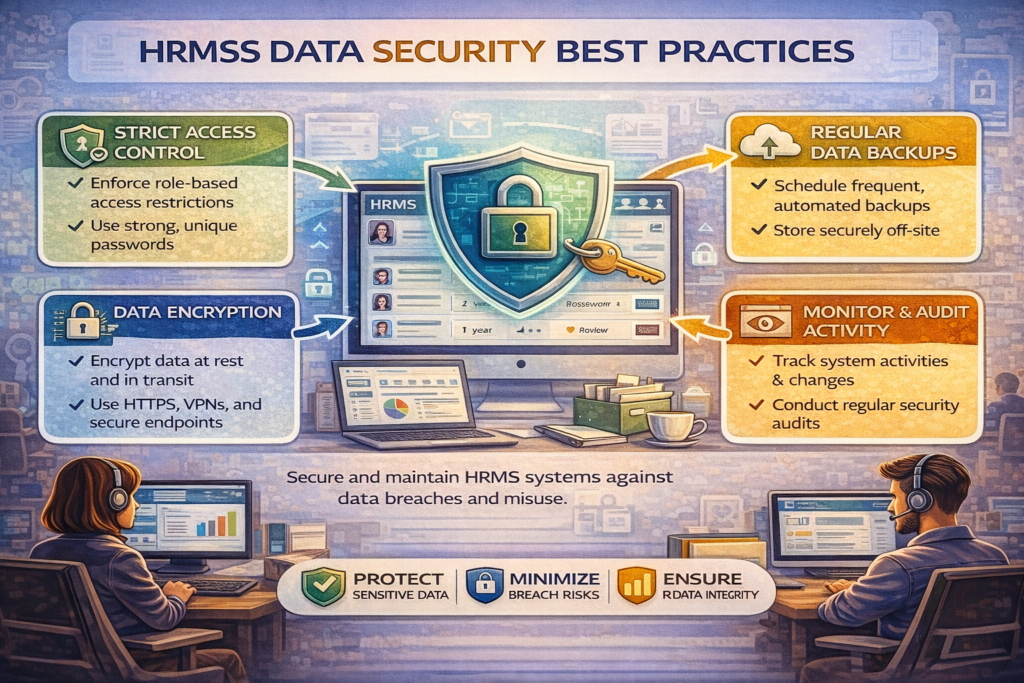
HRMS Data Security Best Practices HRMS data security best practices protect sensitive employee, payroll, and compliance data through role-based access control, encryption, monitoring, audit trails, and governance-driven security policies. HRMS Data Security Best Practices explains how organizations can safeguard employee information, reduce security risks, and maintain trust by applying proven security controls within HR management systems. Who This Guide Is For HR and IT leaders responsible for employee data protection Organizations handling payroll and sensitive workforce data Businesses aligning HR systems with security and compliance standards Security at a Glance: Effective HRMS security combines access controls, encryption, continuous monitoring, audit trails, and governance to protect employee data and reduce risk. Why HRMS Data Security Is Critical HRMS stores highly sensitive personal and payroll data Security breaches can lead to financial and reputational damage Regulatory non-compliance increases legal risk Employee trust depends on data protection Best Practice 1: Implement Role-Based Access Control (RBAC) Restrict data access based on job roles Prevent unauthorized viewing or editing of HR data Apply least-privilege access principles Best Practice 2: Encrypt HRMS Data Encrypt data at rest in databases Encrypt data in transit between systems Protect payroll and personal identifiers Best Practice 3: Enable Audit Trails and Activity Logging Track changes to employee and payroll records Log user access and system actions Support audits and investigations Best Practice 4: Secure Integrations and APIs Control data flow between HRMS and other systems Use secure authentication for integrations Monitor third-party access Best Practice 5: Establish HRMS Governance and Policies Define data ownership and responsibilities Regularly review access permissions Train employees on data security practices Common HRMS Data Security Risks Unauthorized system access Weak password practices Unmonitored integrations Lack of audit visibility Business Outcomes of Strong HRMS Data Security Reduced risk of data breaches Improved regulatory compliance Higher employee trust Stronger organizational resilience FAQs How secure is HRMS data? HRMS data is secure when protected through access controls, encryption, monitoring, and governance policies. What data security risks exist in HRMS? Risks include unauthorized access, weak credentials, unsecured integrations, and lack of monitoring. Who is responsible for HRMS data security? HR, IT, and organizational leadership share responsibility for HRMS data security. Is HRMS compliant with data protection regulations? Yes. Secure HRMS platforms support compliance by enforcing access control, audit trails, and data protection measures. How often should HRMS security be reviewed? HRMS security should be reviewed regularly and whenever organizational or regulatory changes occur.

How HRMS Reduces Operational Costs
Blog

How HRMS Reduces Operational Costs

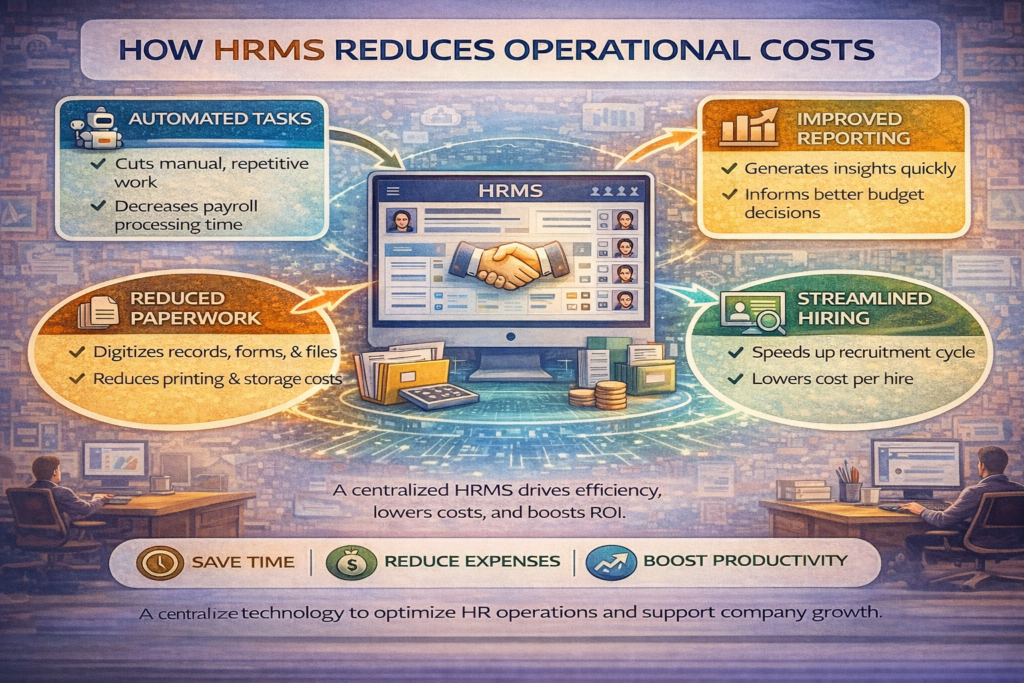
How HRMS Reduces Operational Costs HRMS reduces operational costs by automating HR and payroll processes, minimizing manual effort, reducing errors, improving workforce visibility, and lowering compliance and administrative overhead. How HRMS Reduces Operational Costs explains how organizations can achieve measurable cost savings by replacing fragmented manual processes with centralized, automated HR management systems. Who This Is For Business leaders focused on operational efficiency HR and finance teams managing workforce costs Organizations scaling operations without increasing overhead Cost Reduction at a Glance: HRMS lowers operational costs by reducing administrative labor, eliminating payroll errors, minimizing compliance risks, and improving workforce planning. Why Operational Costs Increase Without HRMS Manual HR and payroll processing High error correction and rework costs Fragmented HR systems and data silos Compliance penalties and audit risks Reducing Administrative and HR Labor Costs Automation of routine HR tasks Employee self-service for common requests Faster approvals and reduced HR workload Lower dependency on manual data entry Lowering Payroll Processing and Error Costs Automated salary and deduction calculations Integration with attendance and leave data Reduced payroll disputes and corrections Consistent payroll accuracy Reducing Compliance and Audit Costs Automated statutory rule enforcement Audit-ready payroll and HR records Reduced risk of fines and penalties Simplified compliance reporting Optimizing Workforce Planning and Utilization Real-time workforce visibility Better scheduling and resource allocation Reduced overtime and staffing inefficiencies Improved cost forecasting Lower IT and System Maintenance Costs Consolidation of multiple HR tools Reduced system integration overhead Lower maintenance and support effort Scalable HR infrastructure Business Outcomes of HRMS-Driven Cost Reduction Lower operational expenditure Improved cost predictability Higher return on HR technology investment Lean and scalable operations FAQs Does HRMS really reduce operational costs? Yes. HRMS reduces costs by automating processes, minimizing errors, and improving workforce efficiency. Which operational costs does HRMS reduce the most? HRMS significantly reduces administrative labor, payroll errors, compliance penalties, and IT overhead. How quickly can HRMS deliver cost savings? Organizations often see operational cost savings within months of HRMS implementation. Is HRMS cost-effective for small and mid-sized businesses? Yes. HRMS helps SMBs scale operations without proportionally increasing costs. Which departments benefit most from HRMS cost reduction? HR, payroll, finance, and operations teams benefit the most.

Scroll to Top