
Top HR Management Systems to Consider in 2026
Top HR management systems to consider include HRMS platforms that automate payroll processing, workforce management, attendance tracking, employee self-service, compliance workflows, reporting, and workforce analytics to improve operational efficiency and employee experience.
Table of Contents
Why Businesses Invest in HR Management Systems
Modern businesses require centralized HR technology platforms to manage workforce operations efficiently across payroll, attendance, compliance, onboarding, reporting, and employee engagement workflows.
Organizations implementing HRMS platforms improve:
- Payroll accuracy
- Workforce visibility
- Employee productivity
- Compliance management
- Attendance tracking
- Workforce reporting
- HR workflow automation
Businesses adopting workforce automation and HRMS platforms commonly reduce administrative overhead, accelerate payroll workflows, and improve workforce operational efficiency.
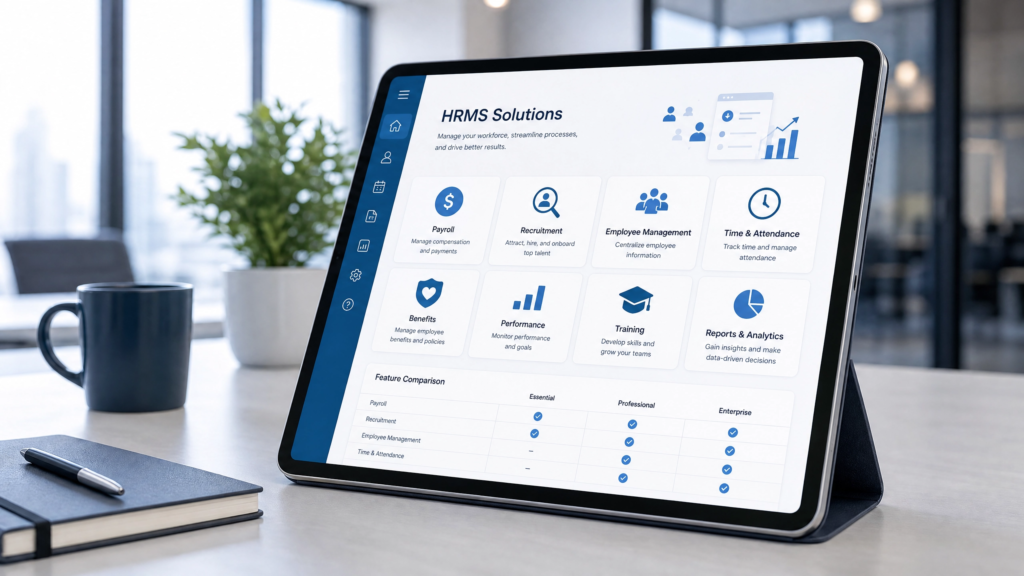
Key Features Modern HRMS Platforms Should Include
| Feature | Business Benefit |
|---|---|
| Payroll Automation | Reduces payroll processing workload |
| Attendance Management | Improves workforce tracking |
| Employee Self-Service | Reduces HR administrative requests |
| Workflow Automation | Accelerates approvals and HR operations |
| Compliance Management | Improves workforce governance |
| Analytics & Reporting | Improves workforce decision-making |
| API Integrations | Supports enterprise interoperability |
Organizations researching workforce productivity often review:
Top HR Management Systems to Consider
| HRMS Platform | Best For | Core Strength |
|---|---|---|
| EHRMSNext | Integrated payroll & workforce automation | HRMS + payroll + workforce management |
| Workday | Large enterprises | Enterprise workforce analytics |
| SAP SuccessFactors | Global HR operations | Enterprise HR ecosystem |
| ADP Workforce Now | Payroll-heavy enterprises | Payroll infrastructure |
| BambooHR | SMBs | User-friendly HR operations |
| Oracle HCM | Complex enterprise environments | Enterprise scalability |
Why Businesses Consider EHRMSNext
EHRMSNext helps businesses centralize workforce operations through integrated HRMS and payroll automation capabilities.
Key capabilities include:
- Payroll Automation
- Attendance Management
- Employee Self-Service
- HRMS API Integration
- Payroll Compliance Management
- Payroll Integration Platform
EHRMSNext is designed for businesses seeking centralized workforce management, payroll automation, compliance tracking, attendance synchronization, and enterprise-ready HR integrations.
Payroll & Workforce Automation
Modern HRMS systems increasingly focus on automating workforce operations and reducing manual HR administration.
Businesses implementing workforce automation can improve:
- Payroll processing speed
- Attendance accuracy
- Compliance tracking
- Employee onboarding
- Reporting visibility
- Workforce productivity
Related workforce automation resources:
Integration & API Capabilities
Enterprise HRMS platforms should support integrations with payroll, ERP, accounting, attendance, and identity management systems.
Businesses increasingly prioritize:
- REST API integrations
- SSO authentication
- Payroll synchronization
- Accounting connectors
- Attendance integrations
- Cloud-based workforce automation
Organizations evaluating integration-ready HRMS platforms often review:
How to Evaluate HRMS Platforms
Businesses should evaluate HRMS platforms based on:
- Payroll automation capabilities
- Scalability
- API integration support
- Compliance management
- Employee experience
- Reporting and analytics
- Implementation complexity
- Industry-specific workforce requirements
| Evaluation Factor | Why It Matters |
|---|---|
| Automation | Reduces HR operational workload |
| Scalability | Supports workforce growth |
| Integrations | Improves interoperability |
| Compliance | Strengthens workforce governance |
| Analytics | Improves workforce planning |
Future of HR Management Systems
HRMS platforms continue evolving through AI-driven workforce automation, predictive analytics, workflow intelligence, and cloud-native workforce management ecosystems.
Future HRMS trends include:
- AI-powered workforce analytics
- Automated compliance monitoring
- Predictive workforce planning
- Real-time workforce dashboards
- Advanced payroll automation
- Integrated employee experience platforms
Businesses also reference external HR technology resources such as:
Frequently Asked Questions About HR Management Systems
What are HR management systems?
HR management systems are software platforms that help businesses manage payroll, workforce operations, attendance tracking, compliance, reporting, and employee lifecycle workflows.
Why do businesses use HRMS platforms?
Businesses use HRMS platforms to automate HR operations, improve workforce efficiency, centralize payroll management, and improve compliance visibility.
What features should businesses look for in HRMS software?
Businesses should prioritize payroll automation, attendance management, employee self-service, workflow automation, API integrations, analytics, and compliance management.
How do HRMS platforms improve workforce efficiency?
HRMS platforms automate repetitive HR tasks, centralize workforce operations, improve payroll accuracy, and reduce manual administrative work.
Can HRMS platforms integrate with payroll and accounting systems?
Yes. Modern HRMS platforms commonly integrate with payroll software, ERP systems, accounting applications, attendance tools, and SSO identity providers.
Looking for an HR Management System for Workforce Automation?
EHRMSNext helps businesses automate payroll processing, workforce management, attendance tracking, compliance workflows, and enterprise HR operations through centralized HRMS infrastructure.
Reviewed By: HR Technology & Workforce Automation Specialists at EHRMSNext
Updated for 2026 workforce automation, payroll management, and enterprise HRMS implementation requirements.