
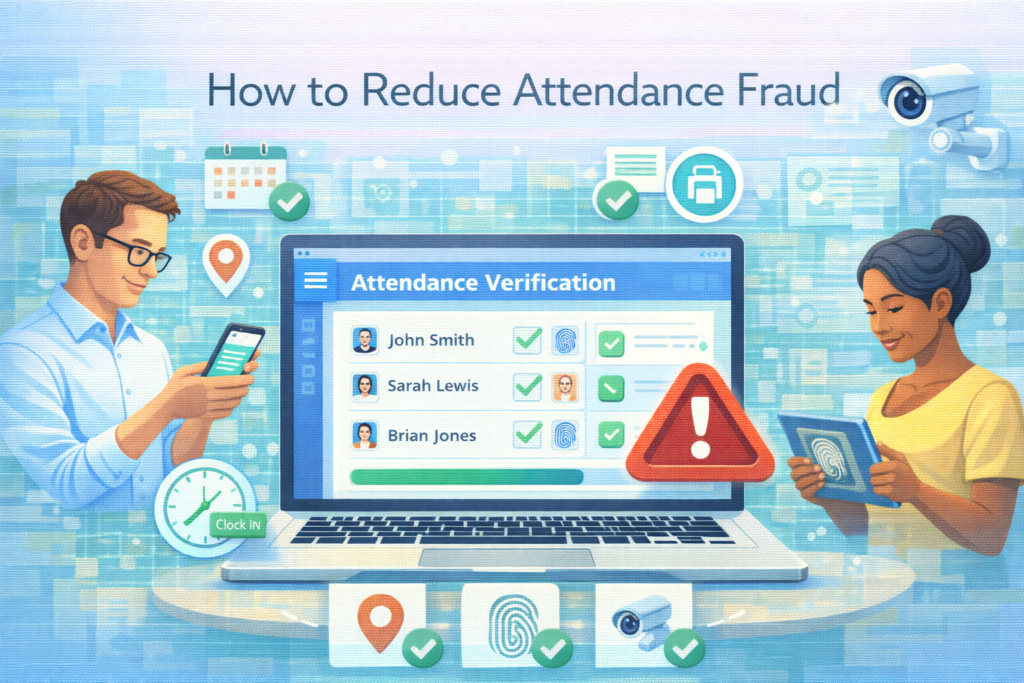
How to Reduce Attendance Fraud
How to Reduce Attendance Fraud in 2026 To reduce attendance fraud in 2026, define clear policies, replace manual tracking with a digital attendance system, use controls like biometrics or GPS, run periodic audits, and restrict who can edit attendance data. This guide explains common types of attendance fraud and the practical steps you can take to reduce time theft and manipulation, including how EHRMSNext can help. What Is Attendance Fraud? Employees recording time for colleagues who are not present (buddy punching). Faking locations or using shared devices to mark attendance from unauthorized places. Manual changes to timesheets that are not properly approved or documented. Summary at a Glance: Attendance fraud usually happens where tracking is manual or loosely controlled. Digital systems, clear rules, and regular audits close the gaps that allow fraud to occur. Step 1: Move Away from Manual Attendance Key Takeaway: Manual registers and basic spreadsheets make fraud easier and harder to detect. Replace paper registers and informal spreadsheets with a digital attendance system. Ensure every check-in and check-out is time-stamped and linked to an identified user. Centralize attendance data so HR and managers can review it in one place. Step 2: Use Strong Identity Verification Key Takeaway: Strong identity checks reduce buddy punching and proxy attendance. Use biometric devices (fingerprint or face) or photo-based clock-ins where appropriate. For field and remote teams, use GPS or geofencing to ensure clock-ins happen from approved locations. Discourage shared credentials and enforce unique logins for each employee. Step 3: Define Clear Attendance Policies Key Takeaway: Policy and communication support the technology and make expectations clear. Document what counts as attendance fraud and the consequences of repeated violations. Explain how attendance is recorded, reviewed, and used for payroll and performance. Train managers and employees so everyone understands the rules and the system. Step 4: Limit and Track Attendance Edits Key Takeaway: Fraud often happens through unchecked manual edits. Restrict who can edit or approve attendance records in the system. Require reasons and approvals for adjustments such as missing punches or back-dated entries. Maintain audit logs showing who changed what, when, and why. Step 5: Monitor Patterns and Run Audits Key Takeaway: Regular checks help you catch issues early and discourage manipulation. Review reports for repeated late arrivals, identical clock-in times, or unusual patterns. Schedule periodic audits of attendance data, especially where time theft has been suspected. Use findings from audits to refine rules, approvals, and system controls. Step 6: Connect Attendance with Payroll and Compliance Key Takeaway: When attendance flows directly into payroll, inconsistencies are easier to spot. Integrate attendance data with payroll calculations so hours and pay stay aligned. Use reports to compare expected versus actual hours for teams and locations. Ensure records are kept for compliance and possible legal or internal reviews. How EHRMSNext Helps Reduce Attendance Fraud Key Takeaway: EHRMSNext combines attendance tracking with HR and payroll controls in one platform. Centralizes attendance, leave, and HR data for consistent review. Supports configuration of rules and approval workflows for attendance changes. Links attendance directly with payroll to reduce manual data handling. Provides reporting that highlights patterns and exceptions for HR and managers. Is EHRMSNext a Fit for Your Attendance Control Needs? ✅ You are currently using manual or informal attendance methods. ✅ You need tighter control over time theft and attendance manipulation. ✅ You want attendance to flow directly into payroll with fewer manual steps. FAQs: How to Reduce Attendance Fraud What is the most common type of attendance fraud? One of the most common types is buddy punching, where one employee records attendance for another who is not actually present. Can digital attendance systems completely remove fraud? Digital systems greatly reduce fraud opportunities, but they work best when combined with clear policies, oversight, and regular audits. Do we need biometrics to reduce attendance fraud? Biometrics are very effective for fixed locations, but GPS or app-based methods can also be useful for remote and field teams. How often should we audit attendance records? Many organizations conduct periodic audits, such as monthly or quarterly, and more frequent checks if issues are suspected. How does EHRMSNext support attendance fraud reduction? EHRMSNext helps by centralizing attendance data, enforcing rules and approvals, connecting attendance with payroll, and providing reports to spot patterns and exceptions.