Author name: jsburra

international payroll compliance
Blog

International Payroll Compliance Rules Every HR Team Must Know

International Payroll Compliance Rules Every HR Team Must Know International payroll compliance is the practice of following labor laws, tax regulations, and employee benefit requirements across every country where your organization employs workers. It covers proper worker classification, accurate calculation of wages and deductions, tax withholding and remittance, and adherence to local employment laws in each jurisdiction. When you hire someone in Germany, Brazil, or Canada, you are not just adding a name to your payroll—you are taking on that country’s full set of statutory obligations. The core components break down into four areas: Labor law adherence: Following country-specific regulations for wages, working hours, and termination procedures Tax compliance: Withholding and reporting income taxes to the right authorities in each jurisdiction Benefits administration: Meeting statutory requirements for leave, insurance, and social contributions Data privacy: Protecting employee information under regional laws like GDPR, HIPAA, and state-level privacy regulations Why International Payroll Compliance Is Getting Harder for HR Teams Every country updates its payroll and tax laws on a different schedule. Tracking changes across the US, Canada, Mexico, Brazil, the EU, and APAC simultaneously requires constant attention—and the pace of updates is accelerating, not slowing down. Remote work has compounded the complexity. Employees now work across borders without setting foot in a local office, which creates tax and benefits obligations in countries where companies may have no legal presence. Meanwhile, pay transparency mandates are spreading globally and many jurisdictions have shifted from annual filings to quarterly or monthly submissions. The margin for error keeps shrinking. Key drivers making compliance harder: Regulatory fragmentation: Each country updates payroll and tax laws on different schedules with minimal coordination Remote workforce expansion: Employees working across borders without physical presence create cross-jurisdictional tax obligations Pay transparency mandates: New reporting requirements emerging globally, including the EU’s 2026 Equal Pay Directive Real-time filing requirements: Shift from annual to quarterly or monthly submissions in multiple jurisdictions Core Pillars of International Payroll Compliance Before processing international payroll, HR teams address five foundational requirements. These form the baseline for compliant operations in any country. Employer Registration and Legal Entity Setup Employers must register with tax and labor authorities in each country before running payroll. A legal entity is the formal business structure that a local government recognizes—it establishes your right to employ and pay workers in that jurisdiction. Without one, you cannot legally process payroll or enter into employment contracts. If you do not have a local entity, you can partner with an Employer of Record (EOR). The EOR becomes the legal employer and handles compliance on your behalf while your team retains day-to-day management of the worker. Worker Classification Governments require correct classification before any pay goes out. Calling someone a contractor when they are legally an employee triggers penalties, back taxes, and mandatory benefits payments in most jurisdictions. Classification rules vary by country, making this one of the highest-risk areas in international payroll. Statutory Pay Frequency Countries mandate different pay cycles. The US allows employer flexibility, Mexico requires bi-weekly payment, and many EU countries require monthly disbursement. Getting pay frequency wrong can result in fines and employee claims even when amounts are correct. Tax Withholding and Reporting Withholding means deducting income tax from an employee’s pay before they receive it—the employer’s obligation, not the employee’s. Reporting deadlines vary by jurisdiction: some countries require monthly filings, others quarterly or annually. Missing deadlines triggers penalties and interest that compound quickly. Data Privacy and Employee Records Payroll data falls under regional privacy laws. GDPR covers the EU, HIPAA and state-level laws apply in the US, and PIPEDA governs Canada. Moving payroll data across borders requires specific safeguards—like GDPR Standard Contractual Clauses—before the transfer is legally permissible. Worker Classification Rules Across Countries Misclassification is one of the most common and expensive compliance failures globally. The distinction between employees and contractors determines who handles taxes, who receives benefits, and what obligations fall on the employer. Classification Tax Responsibility Benefits Eligibility Employer Obligations Full-Time Employee Employer withholds Entitled to statutory benefits Full compliance required Independent Contractor Self-reported Not entitled Limited — varies by country Full-Time Employees Employers handle withholding, benefits enrollment, and statutory contributions for employees. The definition of employee varies by country: California uses the ABC test, the UK applies its own employment status tests under IR35, and Brazil’s CLT creates a strong default presumption of employment. When in doubt, local employment law presumes the worker is an employee. Independent Contractors Workforce contractors handle their own taxes in most countries, but employers must still verify that the classification meets local legal tests before engagement. The UK’s IR35 rules and California’s AB5 law impose strict requirements that reclassify many contractors as employees, particularly in technology and media industries. Misclassification Risk Consequences include back taxes, penalties, mandatory benefits payments, and legal action. In some countries, company directors can face personal liability for misclassification. This risk makes it essential to apply local legal tests in each jurisdiction rather than assuming a single classification standard works everywhere. Statutory Deductions and Contributions HR Teams Must Withhold Every country requires employers to withhold specific amounts from employee pay and remit contributions to government authorities. The categories are broadly consistent, but rates and rules differ significantly. Income Tax Withholding Employers calculate and withhold income tax at source based on each employee’s earnings and applicable tax brackets. Tax tables update annually in most jurisdictions. Configurable salary structures within a statutory payroll compliance system reduce the manual recalculation burden when tables change. Social Security and Pension Contributions Most countries split social security and pension contributions between employer and employee. In the US, FICA covers Social Security and Medicare. In the UK, National Insurance contributions apply. In Brazil, INSS contributions are mandatory. Each system has its own rate, cap, and remittance schedule. Unemployment and Health Insurance Unemployment insurance contributions fund benefits for terminated employees. Health insurance requirements vary from mandatory employer-provided coverage (common in the US for larger employers) to government-run systems funded through payroll taxes (common in Europe). Understanding which model applies in

labor management systems
Blog

What Is a Labor Management System and How Does It Work

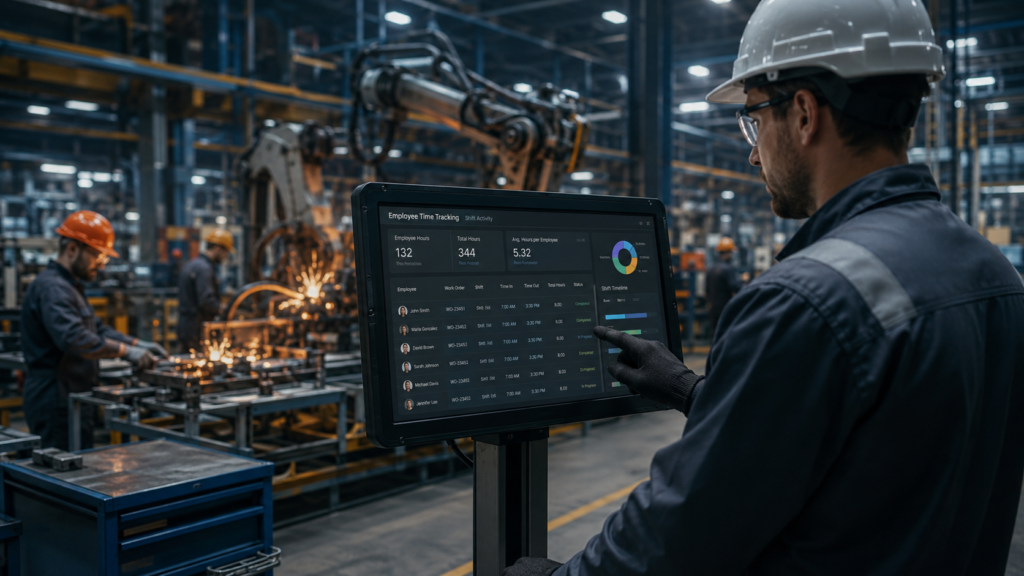
What Is a Labor Management System and How Does It Work A labor management system (LMS) is software that captures employee activity data to measure productivity, optimize staffing, and reduce labor costs. It works by comparing actual performance against established standards, giving operations teams the visibility they need to identify inefficiencies and reward top performers. This guide covers how an LMS works, what it tracks, key features to look for, and how it compares to related systems like WMS, WFM, and HRMS. What Is a Labor Management System A labor management system (LMS) is software that captures employee activity data—often integrated with warehouse management systems or ERPs—to measure productivity, optimize workforce staffing, and reduce labor costs. The system calculates performance against established standards, helping organizations identify inefficiencies, assist with scheduling, and enable incentive-based pay. Think of an LMS as a productivity lens for your workforce. It pulls data from time clocks, RFID scanners, and biometric devices, then compares that data against benchmarks. The result? You see exactly where labor hours are being used well—and where they’re not. Most organizations use an LMS for four core purposes: Measuring productivity: Tracking work completed relative to time spent Identifying inefficiencies: Pinpointing bottlenecks that slow operations Assisting with scheduling: Aligning staffing levels with actual workload Enabling incentive-based pay: Rewarding top performers with objective data How a Labor Management System Works The process starts with data capture. Every time an employee clocks in, scans a badge, or completes a task, the LMS records that activity. Data flows continuously from physical devices into the system without manual entry. From there, the LMS compares captured data against labor standards. Labor standards are benchmarks that define how long specific tasks typically take, accounting for variables like travel distance, task complexity, and worker fatigue. The system then generates insights through dashboards. Managers see real-time KPIs—task completion time, labor utilization, actual versus expected performance—at a glance. Supervisors use this information to adjust schedules, reassign tasks, or recognize high achievers. The cycle repeats, creating a continuous feedback loop that improves over time. What an LMS Tracks and Reveals An LMS provides visibility into workforce performance that manual tracking simply cannot match. You see both individual and group-level data, which helps you understand patterns across shifts, teams, and locations. Here’s what a typical LMS reveals: Individual productivity: How each employee performs against established benchmarks Group performance: Team or shift-level output comparisons Labor utilization: The percentage of paid hours spent on productive work versus idle time Bottlenecks: Specific points in workflows where inefficiencies slow operations Labor often represents the largest controllable cost in operations-heavy industries. When you can see exactly where time is being lost, you can address it directly rather than making broad, uninformed changes. Key Features of a Labor Management System Time and Attendance Capture Time and attendance capture forms the foundational data layer of any LMS. The system connects with time clocks, RFID scanners, and biometric devices to collect real-time activity data. This integration eliminates errors that come with paper timesheets or spreadsheet-based tracking. Every punch, scan, and task completion feeds directly into the system without manual intervention. Labor Standards and Productivity Benchmarks Labor standards define expected completion times for specific tasks. They factor in travel distance, task complexity, equipment requirements, and worker fatigue. With standards in place, you can compare actual performance to expected performance fairly. Employees know exactly what’s expected, and managers have clear targets for evaluation rather than relying on gut feel. Real-Time Workforce Dashboards Dashboards display KPIs including task completion time, labor utilization, and actual versus expected performance. Managers monitor these metrics throughout the day rather than waiting for end-of-week reports. Real-time visibility means faster decisions—if a shift is falling behind, supervisors can reassign resources before the problem compounds. Pay for Performance and Incentives An LMS identifies top performers based on objective data, making it possible to reward employees fairly. It also flags individuals who might benefit from additional coaching or training. This data-driven approach to incentives tends to improve engagement because employees understand exactly how their performance is measured. Compliance and Audit Reporting For organizations in regulated industries, an LMS generates audit-ready trails that document labor activity. Healthcare organizations, for example, use these capabilities to meet HIPAA requirements while maintaining accurate staffing records. Audit trails also support labor law compliance reviews and internal accountability processes. Benefits of a Labor Management System Higher Workforce Productivity Actionable insights from an LMS help managers identify and address inefficiencies quickly. When you can see exactly where time is being lost, you can take targeted action rather than making broad, costly changes. Supervisors spend less time guessing and more time resolving. Lower Labor Costs Improved labor utilization reduces wasted hours. Better scheduling aligns staffing levels with actual workload, so you’re not overstaffed during slow periods or understaffed during peaks—both of which drive up labor costs unnecessarily. Accurate Payroll and Reduced Errors Automated time capture feeds directly into payroll processing, reducing manual data entry mistakes. This accuracy matters for employee trust and for compliance with wage and hour regulations. Stronger Compliance Posture Audit trails and automated reporting help organizations meet regulatory requirements. This is particularly valuable in industries governed by HIPAA, FCRA, and state-level labor laws. The system maintains documentation automatically rather than relying on HR teams to assemble records before each review. Better Workforce Visibility Real-time data gives HR and operations teams a complete picture of labor activity across locations. This visibility supports better planning, faster response to operational issues, and more informed decisions about staffing and scheduling across facilities. Labor Management System vs WMS vs WFM vs HRMS First-time buyers often confuse these systems because their functions overlap. Here’s how they differ: System Primary Focus Typical Users Key Strength LMS Labor productivity & performance tracking Operations, warehouse managers Productivity benchmarks & incentives WMS Inventory & warehouse operations Supply chain, logistics Inventory accuracy & fulfillment WFM Scheduling, time tracking, forecasting HR, operations Shift planning & attendance HRMS Full employee lifecycle HR, finance Payroll, benefits & compliance Labor Management System

pharma payroll software
Blog, Payroll & Compliance Definitions

The 8 Best Leading Payroll Software Platforms for Businesses in 2026

The 8 Best Leading Payroll Software Platforms for Businesses in 2026 Payroll errors cost businesses an average of $291 per incident to correct—and that’s before accounting for the compliance penalties, employee frustration, and administrative hours lost to manual fixes. For organizations running payroll across multiple states or countries, those costs multiply fast. This guide breaks down what separates leading payroll software from basic solutions, walks through the key features worth evaluating, and compares the top eight platforms for businesses in 2026. What Is Leading Payroll Software The top payroll systems for 2026 include ADP for overall scalability, Gusto for small business simplicity, and Rippling for combined HR and IT management. What makes a payroll platform “leading” comes down to four things: how well it automates tax filings, how deeply it handles compliance across regions, whether it offers employee self-service tools, and how smoothly it connects with attendance and HR data. Payroll software, at its core, handles payroll processing—calculating employee pay, withholding taxes, generating payslips, and filing statutory reports. Leading platforms take this further with payroll automation that embeds compliance rules directly into the system—so you’re not manually checking tax codes or chasing down regulatory updates. Why Choosing the Right Payroll Software Matters for Businesses A wrong payroll choice shows up fast. Missed tax filings trigger penalties. Incorrect deductions erode employee trust—49% of workers will seek a new job after just two payroll mistakes. And when HR teams spend hours each pay cycle reconciling spreadsheets, that time adds up quickly. The risks break down into a few categories: Compliance failures: Fines from missed filings or incorrect statutory deductions—the U.S. Department of Labor collected $318 million in back pay and penalties in FY 2025 Payroll errors: Overpayments, underpayments, or delayed salaries Administrative burden: Hours spent on manual calculations instead of strategic work Scalability gaps: Systems that work fine at 50 employees but struggle at 200 Organizations operating across multiple states or countries face even more complexity. Each jurisdiction has its own tax codes and labor laws. A platform that handles California payroll well might stumble with Canadian provincial requirements or Brazilian labor rules. Key Features to Look for in a Leading Payroll Software Platform Before comparing vendors, it helps to know which capabilities actually matter. The features below form the foundation of any platform worth evaluating. Automated Payroll Processing and Tax Filings Automation here means the system calculates gross-to-net pay, applies withholdings, and files federal and state taxes without manual steps. Direct deposit, payslip generation, and year-end tax documents typically come standard. The point is reducing touchpoints where human error can creep in. Fewer manual steps mean fewer discrepancies to chase down later. Statutory and Regulatory Compliance Compliance goes beyond calculating taxes correctly. Leading platforms embed rules for regulations like HIPAA, FCRA, and state-level privacy laws directly into their workflows. Audit trails and compliance dashboards help organizations demonstrate adherence during reviews. This matters especially in industries with strict oversight—healthcare, government, financial services—where a compliance gap can mean more than just fines. Integration with HR and Attendance Systems Payroll accuracy depends on accurate inputs. When time tracking, leave management, and core HR data live in separate systems, discrepancies multiply. Integrated payroll and attendance through REST APIs or native connections ensures that hours worked, PTO taken, and employee status changes flow directly into payroll calculations. For organizations with shift-based or hourly workforces, biometric device integration adds another layer of accuracy. Employee Self Service and Mobile Access Self-service portals let employees view payslips, request advances, update personal information, and check leave balances—without submitting tickets to HR. Mobile apps extend this access to distributed or remote teams. The result: employees get faster answers, and HR teams spend less time on routine inquiries. Configurable Salary Structures and Workflows Enterprises rarely have uniform pay structures. Different departments, regions, and employee types often require distinct salary configurations, bonus rules, and approval workflows. Leading platforms offer configurable structures that adapt to organizational complexity rather than forcing workarounds. Reporting Analytics and Audit Trails Payroll reports, compliance dashboards, and audit-ready documentation support both daily operations and strategic planning. Analytics help finance teams forecast labor costs, while audit trails provide the documentation regulators expect. How to Choose the Best Payroll Software for Your Business With features understood, the next step is evaluating platforms against your specific situation. This framework helps structure that evaluation. 1. Confirm Compliance Coverage Across Your Regions Check whether the platform supports your operating locations—US, Canada, Mexico, Brazil, or wherever your workforce is based. Confirm that it handles local tax codes, labor laws, and statutory reporting for each region. 2. Evaluate Integration with Existing HR and Finance Systems Verify compatibility with your current accounting software, time tracking tools, and HRIS. Ask specifically about SSO (single sign-on) and REST API availability for custom integrations. 3. Assess Scalability for Workforce Growth Determine whether the system can handle increased headcount, new locations, and multi-entity structures without performance issues. Growth often reveals limitations that weren’t apparent at smaller scale. 4. Review Automation and AI Capabilities Look for AI-powered features like anomaly detection, predictive analytics, and automated compliance alerts. These capabilities reduce manual oversight and catch issues before they become problems. 5. Test Ease of Use and Employee Self Service Request a demo to evaluate interface usability for both HR admins and employees. A powerful system that’s difficult to use often leads to workarounds that undermine its benefits. 6. Verify Customer Support and Implementation Ask about 24/7 support availability, implementation timelines, data migration assistance, and training resources. The transition period is often where payroll projects succeed or struggle. The 8 Best Leading Payroll Software Platforms Here are the leading options for organizations evaluating payroll software in 2026, ordered by relevance to enterprise and compliance-focused buyers. EHRMSNext Best for: Enterprise payroll accuracy and statutory compliance across regions (US, CA, MX, BR) Configurable Salary Structures & Payroll Processing 100% Compliance Guaranteed with HIPAA, FCRA, State-Level Privacy Laws Integrated Attendance, Leave & Expense Data Employee Self-Service Portals & Mobile Apps 24/7 Expert Support EHRMSNext serves 500+ enterprises

Personio Alternative
Alternatives

Personio Alternative: Why Growing Businesses Are Switching to Smarter HR Software

Personio Alternative: Why Growing Businesses Are Switching to Smarter HR Software Quick Answer: A Personio alternative like EHRMSNext offers advanced payroll automation, flexible HR workflows, and scalable workforce management—making it ideal for growing businesses. A Personio alternative is becoming essential for growing businesses that need more than basic HR tools. While Personio works well for simple HR management, companies often look for a more scalable Personio alternative with payroll integration and automation. Modern platforms like EHRMSNext provide a complete HRMS ecosystem, making them a strong Personio alternative for organizations aiming to scale efficiently. Why Businesses Are Searching for a Personio Alternative Companies evaluating a Personio alternative often face limitations as their HR requirements expand. Limited payroll functionality in Personio Basic HR automation features Restricted customization options Difficulty scaling HR operations Many decision-makers explore insights from the HRMS blog before selecting the right Personio alternative. Key Features to Look for in a Personio Alternative A strong Personio alternative should provide complete HR and payroll capabilities. Integrated payroll and compliance management Advanced HR automation workflows Real-time analytics and reporting Scalable HR infrastructure for growing teams Mid Summary: Businesses looking for a Personio alternative typically need payroll automation, scalability, and flexibility. Platforms like EHRMSNext provide a modern HRMS solution that replaces basic HR tools. Personio Alternative Comparison: Modern HRMS vs Personio Feature Modern HRMS (EHRMSNext) Personio Payroll Integration Full Automation Limited HR Automation Advanced Basic Customization Flexible Restricted Scalability High Moderate Workforce Management Complete Partial To understand how a Personio alternative performs in real-world scenarios, explore HRMS use cases. Why EHRMSNext Is the Best Personio Alternative EHRMSNext features highlight why it stands out as a Personio alternative for modern businesses. End-to-end HR and payroll automation Real-time employee tracking and insights Custom workflows for different business needs Industry-ready HR solutions Businesses across sectors adopt HRMS industry solutions, making it a reliable Personio alternative. Who Should Choose a Personio Alternative? A Personio alternative is ideal for companies that need scalability and flexibility. Growing businesses scaling HR operations Companies needing payroll integration Organizations requiring automation Teams seeking complete HR systems If you’re planning to switch to a Personio alternative, connect via the contact page. Frequently Asked Questions What is the best Personio alternative? EHRMSNext is one of the best Personio alternatives offering payroll and automation. Why do businesses need a Personio alternative? Businesses need a Personio alternative for better scalability, payroll, and automation. Is EHRMSNext a good Personio alternative? Yes, it provides a complete HRMS solution beyond basic HR tools. Which Personio alternative is best for growing companies? EHRMSNext is ideal for scalable HR management.

Hibob Alternative
Alternatives

Hibob Alternative: Why Growing Companies Need More Than Culture-Focused HR Software

Hibob Alternative: Why Growing Companies Need More Than Culture-Focused HR Software Quick Answer: A Hibob alternative like EHRMSNext provides full payroll, HR automation, and workforce management, unlike Hibob which focuses mainly on employee experience and culture. Choosing the right Hibob alternative is essential for companies that need more than culture-driven HR tools. While Hibob excels in employee engagement and experience, many businesses require deeper payroll integration and operational HR capabilities. Modern platforms like EHRMSNext offer a complete HRMS solution, making them a strong Hibob alternative for scaling organizations. Why Businesses Are Searching for a Hibob Alternative Organizations evaluating a Hibob alternative often need more functionality beyond engagement tools. Limited payroll capabilities in Hibob Focus on culture rather than full HR operations Restricted automation for complex workflows Challenges in scaling HR processes Many companies explore insights from the HRMS blog before selecting the right Hibob alternative. What Makes the Best Hibob Alternative in 2026? A modern Hibob alternative should deliver complete HR functionality. Integrated payroll and compliance Advanced HR automation workflows Real-time analytics and reporting Scalable workforce management Mid Summary: Businesses searching for a Hibob alternative typically need payroll integration, automation, and scalability. Platforms like EHRMSNext provide a complete HRMS solution beyond culture-focused tools. Hibob Alternative Comparison: Modern HRMS vs Hibob Feature Modern HRMS (EHRMSNext) Hibob Payroll Integration Full Automation Limited HR Automation Advanced Moderate Customization Flexible Restricted Scalability High Moderate Focus Full HRMS Employee Experience To understand how a Hibob alternative performs in real scenarios, explore HRMS use cases. Why EHRMSNext Is the Best Hibob Alternative EHRMSNext features show why it is a strong Hibob alternative for growing companies. End-to-end HR and payroll automation Real-time employee tracking Custom workflows for business needs Industry-ready HR solutions Businesses across sectors adopt solutions available in HRMS industry pages, making it a reliable Hibob alternative. Who Should Choose a Hibob Alternative? A Hibob alternative is ideal for companies needing full HR control. Growing businesses scaling HR operations Companies needing payroll integration Organizations requiring automation Teams seeking complete HR systems If you’re planning to switch to a Hibob alternative, connect via the contact page. Frequently Asked Questions What is the best Hibob alternative? EHRMSNext is one of the best Hibob alternatives offering payroll and automation. Why switch to a Hibob alternative? Businesses switch to a Hibob alternative for better scalability and HR operations. Is EHRMSNext a good Hibob alternative? Yes, it provides a complete HRMS solution beyond culture tools. Which Hibob alternative is best for scaling companies? EHRMSNext is ideal for growing organizations.

Zenefits Alternative
Alternatives

Zenefits vs Modern HRMS: Why Businesses Want More Than Just Benefits Management

Zenefits Alternative: Why Businesses Want More Than Just Benefits Management Quick Answer: A Zenefits alternative like EHRMSNext offers full payroll automation, advanced HR workflows, and scalable workforce management beyond basic benefits administration. Choosing the right Zenefits alternative has become critical for businesses that need more than benefits management. While Zenefits provides basic HR features, growing organizations require payroll integration, automation, and scalability. Modern platforms like EHRMSNext deliver a complete HRMS experience, making them a strong Zenefits alternative for businesses aiming to scale efficiently. Why Businesses Are Searching for a Zenefits Alternative Companies evaluating a Zenefits alternative often face limitations in payroll, customization, and scalability. Limited payroll capabilities in Zenefits Basic HR automation compared to modern tools Restricted customization for growing teams Challenges in scaling HR operations Many decision-makers explore insights through the HRMS blog before choosing a better Zenefits alternative. What Makes the Best Zenefits Alternative in 2026? A strong Zenefits alternative should go beyond benefits and provide a complete HR ecosystem. Integrated payroll and compliance Advanced HR automation workflows Real-time analytics and reporting Scalable HR infrastructure Mid Summary: Businesses looking for a Zenefits alternative typically need payroll automation, scalability, and flexibility. Platforms like EHRMSNext provide a modern HRMS solution that replaces traditional benefits-focused systems. Zenefits Alternative Comparison: Modern HRMS vs Zenefits Feature Modern HRMS (EHRMSNext) Zenefits Payroll Integration Full Automation Limited HR Automation Advanced Basic Customization Flexible Restricted Scalability High Moderate Workforce Management Complete Partial To understand how a Zenefits alternative works in real-world scenarios, explore HRMS use cases. Why EHRMSNext Is the Best Zenefits Alternative EHRMSNext features demonstrate why it stands out as a Zenefits alternative for modern businesses. End-to-end HR and payroll automation Real-time employee tracking Custom workflows for business needs Industry-ready HR solutions Businesses across sectors benefit from tailored solutions available in HRMS industry solutions, making it a strong Zenefits alternative. Who Should Choose a Zenefits Alternative? A Zenefits alternative is ideal for companies that require more control and scalability. Growing businesses scaling HR operations Companies needing payroll integration Organizations requiring automation Teams seeking flexible HR systems If you’re planning to switch to a Zenefits alternative, connect through the contact page for expert guidance. Frequently Asked Questions What is the best Zenefits alternative? EHRMSNext is one of the best Zenefits alternatives offering payroll, automation, and scalability. Why switch to a Zenefits alternative? Businesses switch to a Zenefits alternative for better payroll, automation, and flexibility. Is EHRMSNext a good Zenefits alternative? Yes, EHRMSNext provides a complete HRMS solution beyond basic benefits. Which Zenefits alternative is best for scaling businesses? EHRMSNext is ideal for growing companies needing scalable HR systems.

Darwinbox Alternative
Alternatives

Darwinbox Alternative for Payroll & HR Automation: Complete Guide

Darwinbox Alternative for Payroll & HR Automation: Complete Guide Quick Answer: The best Darwinbox alternatives include EHRMSNext, Keka, Zoho People, and SAP SuccessFactors—offering stronger payroll automation, better customization, and scalable HR systems. Darwinbox is a widely used HR platform, especially among mid-sized and enterprise organizations. However, many businesses explore alternatives as their HR needs evolve toward deeper automation, better payroll control, and flexible workflows. Modern solutions like EHRMSNext provide a more adaptable approach, combining HR, payroll, and workforce automation into one unified platform. Why Businesses Look for Darwinbox Alternatives As organizations grow, they require more flexible and automation-driven HR systems. Limited flexibility in complex HR workflows Payroll customization challenges High implementation and maintenance overhead Need for deeper automation and reporting Many decision-makers explore insights from the HRMS blog before selecting a better platform. Mid Summary: Businesses searching for Darwinbox alternatives typically need better payroll automation, scalable HR systems, and flexible workflows. The platforms below provide stronger capabilities for modern HR operations. Top Darwinbox Alternatives for Payroll & HR Automation 1. EHRMSNext A complete HRMS platform designed for automation and scalability. End-to-end payroll automation Flexible HR workflows Real-time analytics and reporting Explore EHRMSNext features to understand its capabilities. 2. Keka A payroll-focused HR software popular in growing organizations. Advanced payroll processing Employee experience tools Attendance management 3. Zoho People A flexible HR system integrated with the Zoho ecosystem. Custom workflows Cloud-based HR management Integration with Zoho apps 4. SAP SuccessFactors An enterprise-grade HR platform with global capabilities. Advanced HR modules Global workforce management Enterprise scalability 5. Oracle HCM A comprehensive HR system designed for large enterprises. Complex HR workflows Enterprise-level analytics Global HR management To understand how these systems work in real environments, explore HRMS use cases. How to Choose the Right Darwinbox Alternative Selecting the right HRMS depends on your organization’s size and requirements. Evaluate payroll and compliance needs Check system scalability Compare customization and integrations Analyze long-term ROI Why EHRMSNext Stands Out EHRMSNext offers a balanced solution for businesses transitioning from complex HR platforms. All-in-one HR and payroll automation Scalable for growing enterprises Flexible workflows and reporting Industry-ready HR solutions Businesses across sectors adopt tailored solutions available in HRMS industry solutions. Frequently Asked Questions What is the best Darwinbox alternative? EHRMSNext is one of the best alternatives offering payroll automation and scalability. Why do companies switch from Darwinbox? Due to customization limits, cost, and automation requirements. Which HR software is best for enterprises? SAP SuccessFactors, Oracle HCM, and EHRMSNext are strong options. Is Darwinbox suitable for growing businesses? Yes, but scaling companies often need more flexible systems.

Factorial Alternative
Alternatives

Best Factorial Alternative in 2026: Top HR Software Options Compared

Best Factorial Alternative in 2026: Top HR Software Options Compared Quick Answer: The best Factorial alternatives in 2026 include EHRMSNext, BambooHR, Zoho People, and Keka—offering better payroll integration, scalability, and advanced HR automation. Factorial is a popular HR tool for small and mid-sized businesses, but many companies outgrow it as their HR needs become more complex. Businesses often look for alternatives that provide stronger payroll, better customization, and scalable HR operations. Modern platforms like EHRMSNext and other leading HR solutions offer more comprehensive capabilities compared to Factorial. Why Businesses Look for Factorial Alternatives As organizations grow, they require more advanced HR systems than what basic tools can offer. Limited payroll functionality Restricted customization options Challenges in scaling HR processes Need for advanced reporting and automation Many companies explore insights and comparisons through the HRMS blog before selecting a better platform. Mid Summary: Businesses searching for Factorial alternatives typically need better payroll integration, scalable HR systems, and advanced automation. The platforms listed below provide stronger capabilities for growing teams. Top Factorial Alternatives in 2026 1. EHRMSNext A complete HR and payroll platform designed for growing businesses. End-to-end HR automation Built-in payroll system Flexible workflows and reporting Explore full EHRMSNext features to understand its capabilities. 2. BambooHR A well-known HR software focused on employee management and onboarding. Strong employee database User-friendly interface Basic HR automation 3. Zoho People A flexible HR platform integrated within the Zoho ecosystem. Custom workflows Cloud-based HR system Integration with Zoho apps 4. Keka A payroll-focused HR software popular among growing businesses. Payroll automation Attendance tracking Employee experience tools 5. GreytHR An HR and payroll solution focused on compliance and payroll efficiency. Strong payroll processing Compliance management HR automation tools To understand how these platforms work in real-world scenarios, explore HRMS use cases. How to Choose the Right Factorial Alternative Choosing the right HR software depends on your business size and operational needs. Evaluate payroll and compliance requirements Check scalability for future growth Compare customization and integrations Analyze pricing and ROI Why EHRMSNext Stands Out EHRMSNext provides a balanced solution for businesses transitioning from basic HR tools. All-in-one HR and payroll platform Scalable for growing organizations Flexible and customizable workflows Industry-ready HR solutions Businesses across industries adopt tailored solutions available in HRMS industry pages. Frequently Asked Questions What is the best Factorial alternative? EHRMSNext is one of the best alternatives offering payroll, automation, and scalability. Why do companies switch from Factorial? Due to limited payroll features and scalability challenges. Which HR software is best for growing businesses? EHRMSNext, BambooHR, and Zoho People are strong options. Is Factorial good for small businesses? Yes, but growing companies often need more advanced features.

Justworks Alternative
Alternatives

Justworks Alternative: Why Businesses Are Taking Back Control of Payroll & HR in 2026

Justworks Alternative: Why Businesses Are Taking Back Control of Payroll & HR in 2026 Direct Answer: EHRMSNext is a powerful Justworks alternative for businesses that want full control over payroll, HR operations, and compliance without relying on a PEO model. Justworks has helped many businesses manage payroll and compliance through its PEO model. However, as companies grow, they often seek more control, flexibility, and cost transparency. Modern platforms like EHRMSNext allow businesses to bring HR operations in-house while maintaining automation, compliance, and efficiency. Why Businesses Are Moving Away from Justworks PEO models can be limiting for companies that want to scale independently. Lack of full control over HR and payroll processes Bundled pricing that increases operational costs Limited customization for unique business workflows Dependency on third-party structures Many companies explore alternatives by reviewing insights from the HRMS blog before making a transition. What Businesses Want Instead of a PEO Model Companies are shifting toward HR systems that provide ownership and flexibility. Direct control over payroll and HR operations Transparent pricing without bundled services Flexible workflows tailored to business needs Scalable HR systems for growing teams Mid Summary: Businesses leaving Justworks are primarily looking for control, flexibility, and cost transparency. EHRMSNext enables companies to manage HR and payroll independently while maintaining automation and compliance. EHRMSNext vs Justworks: Key Differences This comparison highlights the shift from PEO to modern HRMS platforms. Feature EHRMSNext Justworks Control Full Ownership Limited (PEO Model) Pricing Transparent Bundled Customization Flexible Restricted Scalability High Moderate HR Independence Yes No To understand how HR systems perform in real business scenarios, explore HRMS use cases. Why EHRMSNext Is the Better Alternative EHRMSNext features are designed for businesses transitioning away from PEO dependency. End-to-end payroll and HR automation Real-time employee data and analytics Custom workflows for business operations Industry-ready HR solutions Businesses across sectors benefit from tailored solutions available in HRMS industry solutions. Who Should Switch from Justworks? This is ideal for companies ready to take full control of HR operations. Businesses moving away from PEO dependency Growing teams scaling HR processes Companies reducing payroll costs Organizations seeking operational control If you’re planning a transition, you can connect through the contact page for expert guidance. HR Trends in 2026: Moving Beyond PEO Businesses are increasingly shifting from PEO models to independent HR systems. Professionals stay updated through platforms like LinkedIn to follow industry changes. Frequently Asked Questions What is the best Justworks alternative? EHRMSNext is a strong alternative offering full control and flexibility. Why are companies leaving Justworks? Businesses switch due to lack of control, higher costs, and PEO limitations. Is EHRMSNext better than Justworks? Yes, especially for companies wanting independent HR and payroll management. Should I move away from a PEO model? Yes, if you want more control, flexibility, and cost efficiency.

Deel Alternative
Alternatives

Struggling with Deel for Global Payroll? Here’s a Smarter Alternative for Growing Teams

Struggling with Deel for Global Payroll? Here’s a Smarter Alternative for Growing Teams Direct Answer: EHRMSNext is a smarter Deel alternative for growing teams that need flexible global payroll, simplified compliance, and full HR control without high per-employee costs. Deel has become a popular choice for managing global contractors and remote teams. However, as companies scale, many start facing challenges related to pricing, flexibility, and expanding HR operations beyond contractor management. Modern platforms like EHRMSNext provide a more scalable solution, enabling businesses to manage global payroll, employee data, and compliance in one unified system. Why Growing Teams Struggle with Deel While Deel works well for early-stage remote hiring, scaling businesses often encounter limitations. High per-employee and contractor costs Limited flexibility beyond contractor management Complex compliance handling across multiple countries Dependency on external structures for full HR operations Many companies evaluate alternatives by exploring insights from the HRMS blog to find scalable solutions. What a Better Global Payroll Solution Should Offer Scaling companies need more than contractor management—they need a complete global HR ecosystem. Unified payroll for employees and contractors Simplified compliance across regions Flexible workforce management Centralized HR operations and reporting Mid Summary: Businesses moving away from Deel are looking for lower costs, better scalability, and full HR control. EHRMSNext delivers these benefits with a unified global payroll and HR management platform. EHRMSNext vs Deel: Key Differences This comparison highlights how both platforms differ for growing teams. Feature EHRMSNext Deel Global Payroll Unified System Contractor Focused Cost Efficiency Better Higher HR Integration Full HRMS Limited Scalability High Moderate Compliance Simplified Complex To understand real-world global HR operations, explore HRMS use cases. Why EHRMSNext Is a Smarter Global Alternative EHRMSNext features are designed for growing global teams. End-to-end global payroll automation Real-time workforce data across locations Flexible workflows for global HR operations Industry-ready global HR solutions Businesses across regions benefit from tailored solutions available in HRMS industry solutions. Who Should Switch from Deel? This is ideal for teams scaling beyond basic contractor management. Startups expanding globally Scaleups managing distributed teams Companies reducing global payroll costs Organizations needing full HR control If you’re planning to scale your workforce globally, you can connect through the contact page for expert support. Global Payroll Trends in 2026 Global workforce management is evolving toward unified HR platforms. Professionals stay updated through platforms like LinkedIn to track global HR trends. Frequently Asked Questions What is the best Deel alternative? EHRMSNext is a strong alternative offering scalable global payroll and HR management. Why are companies moving away from Deel? Due to high costs, limited scalability, and contractor-focused features. Is EHRMSNext suitable for global teams? Yes, it supports global payroll and workforce management. Which platform is best for global payroll? EHRMSNext is ideal for managing global payroll efficiently.

Scroll to Top