

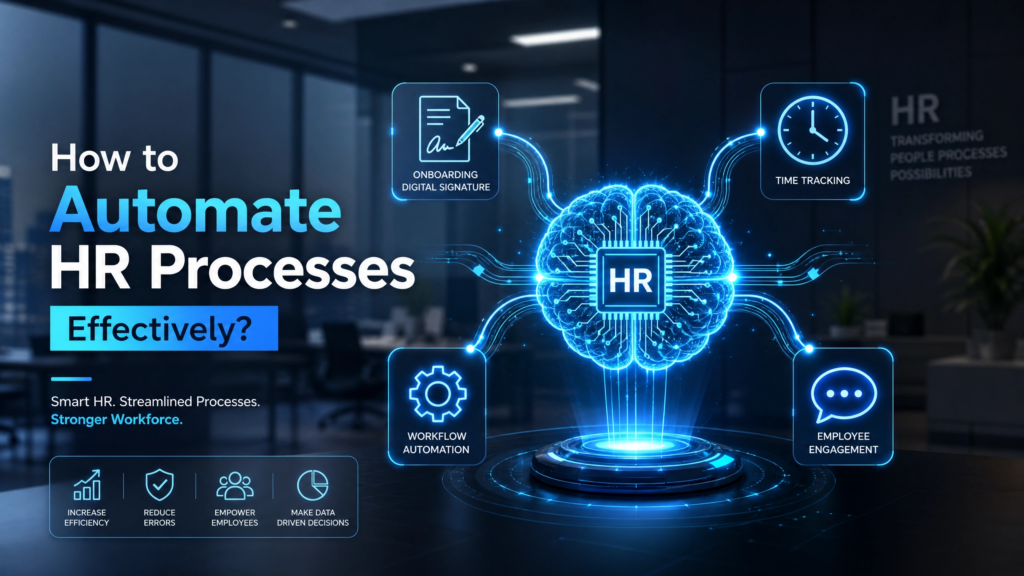
How to Automate HR Processes Effectively (2026 Guide)
How to automate HR processes effectively involves using HRMS software, payroll automation, workflow automation, integrations, employee self-service portals, and workforce management systems to streamline HR operations, reduce manual work, improve compliance, and increase operational efficiency.
Table of Contents
What Is HR Process Automation?
HR process automation refers to using software platforms and digital workflows to automate repetitive HR tasks, workforce operations, payroll activities, employee record management, and compliance processes.
Modern organizations use HRMS Software and Payroll Software to automate HR workflows and improve workforce management efficiency.
HR automation typically includes:
- Payroll automation
- Employee onboarding workflows
- Attendance tracking automation
- Leave management automation
- Performance management workflows
- Employee self-service systems
- HR compliance tracking
Why HR Automation Matters
Manual HR operations become increasingly difficult as workforce size, compliance complexity, and operational demands grow.
- Manual HR tasks reduce productivity
- Payroll errors create compliance risks
- Paper-based workflows slow HR operations
- Disconnected systems reduce workforce visibility
- Manual approvals delay employee workflows
Organizations implementing HR automation improve operational efficiency, workforce visibility, payroll accuracy, and employee experience across HR operations.
Common HR Processes to Automate
| HR Process | Automation Benefit |
|---|---|
| Payroll Processing | Reduces payroll calculation errors |
| Attendance Tracking | Automates workforce time tracking |
| Employee Onboarding | Accelerates hiring workflows |
| Leave Management | Improves leave approval efficiency |
| Performance Reviews | Centralizes performance tracking |
| Expense Reimbursements | Automates expense approvals |
Businesses often integrate Attendance Management Systems to automate attendance-to-payroll synchronization and workforce tracking.
Benefits of HR Automation
HR automation helps businesses streamline workforce operations while improving workforce visibility and compliance management.
- Reduces manual administrative work
- Improves payroll accuracy
- Enhances employee experience
- Improves workforce visibility
- Accelerates approval workflows
- Strengthens payroll compliance
- Supports workforce scalability
Organizations implementing HRMS with payroll compliance can centralize payroll workflows and workforce management operations.
Core HR Automation Technologies
HRMS Platforms
HRMS platforms centralize workforce operations, employee records, payroll management, and compliance tracking.
Workflow Automation
Workflow automation helps automate approvals, notifications, onboarding, attendance approvals, and HR documentation workflows.
Employee Self-Service Portals
Employee self-service systems allow employees to:
- Access payslips
- Apply for leave
- Update personal details
- Track attendance
- View payroll records
Organizations using Employee Self-Service Portals improve workforce engagement and reduce HR administrative workloads.
API Integrations
Modern HR automation platforms rely on HRMS API integration to connect payroll systems, ERP platforms, attendance systems, and accounting applications.
How to Implement HR Automation Effectively
1. Identify Manual HR Processes
Businesses should identify repetitive HR tasks causing operational inefficiencies.
- Payroll processing
- Attendance tracking
- Employee onboarding
- Leave approvals
- Document management
2. Standardize HR Workflows
Standardized workflows improve automation success and reduce process inconsistencies.
3. Select the Right HRMS Platform
Businesses should evaluate:
- Payroll automation capabilities
- Compliance management
- API integration support
- Scalability
- Reporting features
- User experience
4. Integrate Workforce Systems
HR automation works best when payroll, attendance, HR, ERP, and accounting systems operate through centralized integrations.
5. Train HR Teams and Employees
Successful automation depends on workforce adoption and proper HR training.
Common HR Automation Challenges
- Legacy system limitations
- Data migration complexity
- Integration challenges
- Employee adoption resistance
- Compliance workflow customization
- Inconsistent HR processes
Organizations migrating from older systems often evaluate HRMS platform comparisons before selecting automation-ready HR systems.
HR Automation Best Practices
- Start with high-volume HR workflows
- Automate payroll and attendance first
- Use centralized employee databases
- Implement approval workflows
- Track HR automation performance
- Maintain workforce compliance visibility
| Best Practice | Business Impact |
|---|---|
| Payroll Automation | Improves payroll accuracy |
| Attendance Integration | Reduces payroll discrepancies |
| Workflow Standardization | Improves HR operational consistency |
| Employee Self-Service | Reduces HR administrative tasks |
| API Integrations | Improves workforce data synchronization |
Future of HR Automation
HR automation continues evolving through AI-driven workforce management, predictive analytics, and intelligent workflow automation.
- AI-powered HR assistants
- Predictive workforce analytics
- Automated compliance monitoring
- Smart payroll processing
- Advanced workforce reporting
- Cloud-native HR ecosystems
Businesses increasingly invest in workforce automation to improve operational scalability, workforce visibility, and employee experience.
Frequently Asked Questions About HR Automation
What is HR process automation?
HR process automation involves using software systems to automate payroll, attendance, onboarding, leave management, reporting, and workforce administration workflows.
Why is HR automation important?
HR automation improves operational efficiency, payroll accuracy, workforce visibility, compliance management, and employee experience.
What HR processes should businesses automate first?
Businesses typically automate payroll processing, attendance tracking, employee onboarding, leave management, and employee self-service workflows first.
Can HRMS software automate payroll compliance?
Yes. Modern HRMS platforms automate payroll tax calculations, payroll reporting, compliance tracking, and workforce payroll workflows.
How does HR automation improve employee experience?
HR automation improves employee experience by reducing delays, improving payroll accuracy, accelerating approvals, and enabling self-service access to workforce information.
Looking to Automate HR Processes Effectively?
EHRMSNext helps businesses automate payroll processing, workforce management, attendance tracking, employee self-service, HR workflows, and compliance management through a centralized HRMS platform.
Reviewed By: HR Automation & Workforce Technology Specialists at EHRMSNext
Updated for 2026 HR automation, workforce management, and payroll compliance requirements.